Saul's Downfall: Understanding the Dangers of Pride
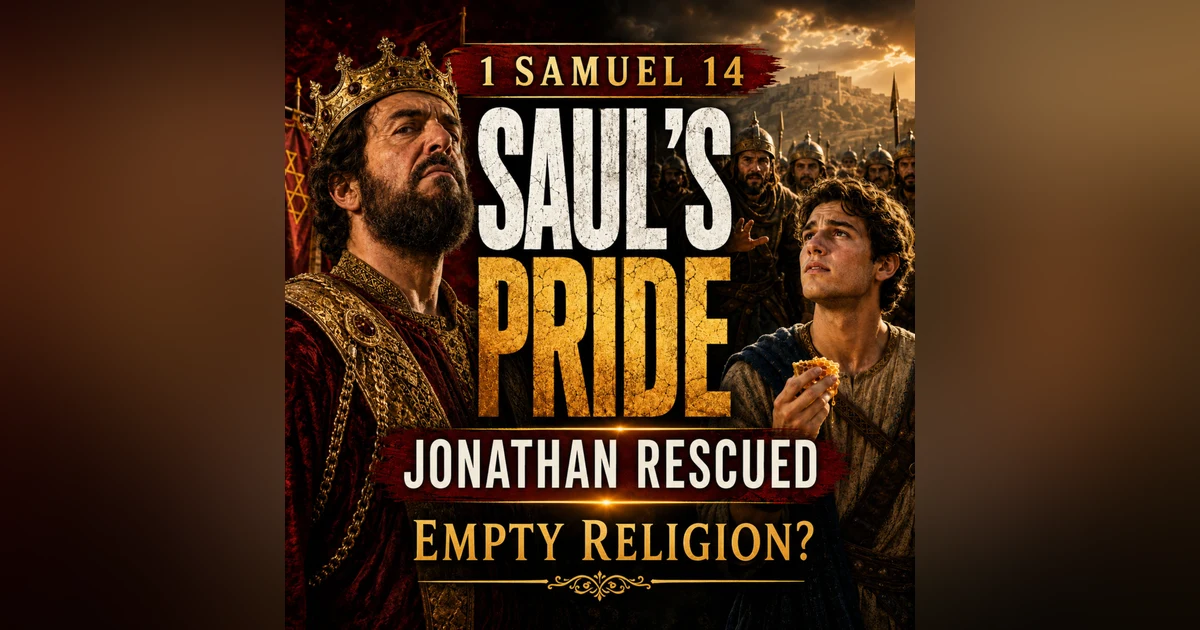


This podcast episode delves into the pernicious nature of pride, as exemplified by King Saul's tumultuous reign, particularly in the context of First Samuel, chapter 14. We elucidate how Saul's prideful decisions, particularly his ill-considered oath, culminated in dire consequences for himself and his son, Jonathan. The discussion emphasizes the moral imperative of humility before God, contrasting Saul's impulsive actions with the faithful reliance on divine guidance exemplified by Jonathan. As we explore the biblical texts, we draw attention to the profound truth that pride precedes destruction, and we reflect on the necessity of acknowledging our flaws to foster genuine repentance. Ultimately, we aim to inspire listeners to examine their own lives for the subtle encroachments of pride and to align their hearts with the teachings of Scripture.
Takeaways:
- In this episode, we delve into the perils of pride as exemplified by King Saul's actions and decisions during his reign.
- The discussion emphasizes the importance of humility and the dangers of allowing pride to dictate one's choices in life.
- We explore the biblical perspective on pride, including Proverbs 16:18, which states that pride precedes destruction and a haughty spirit leads to downfall.
- The podcast highlights the necessity of repentance and recognizing one's flaws, contrasting the responses of Saul and Jonathan in the face of sin.
- We examine the consequences of Saul's hasty oath and how it ultimately endangered his son Jonathan, demonstrating the ramifications of prideful leadership.
- Lastly, we encourage listeners to reflect on their own lives, identifying areas where pride may hinder their relationship with God and their spiritual growth.
Thank you for joining our podcast. Visit our website at https://middletownbaptistchurch.org/
Subscribe to our YouTube at https://www.youtube.com/@middletownbaptistchurchde5091
Follow us on Facebook https://www.facebook.com/MBCDelaware
This podcast is produced by Ralph Estep, Jr., host of Financially Confident Christian, a daily podcast on Christian Finance you can find it at https://www.financiallyconfidentchristian.com
00:00 - Untitled
00:00 - Introduction to the Podcast
00:23 - The Dangers of Pride
11:31 - Saul's Pride and Its Consequences
19:02 - The Consequences of Prideful Decisions
22:24 - The Consequences of Pride
31:51 - Saul's Pride and Downfall
39:26 - Embracing Conviction and Humility
Hello and welcome to the Middletown Baptist Church Podcast, where we are proclaiming the truth to the world.
Speaker AMy name is Pastor Josh, and I want to thank you for listening to this podcast.
Speaker AI hope that this podcast can be a blessing to you and strengthen you in the word of God.
Speaker ANow, come along.
Speaker ALet's look into the Bible and see what God has for us here today.
Speaker BLet's get right into our Bible study here this evening.
Speaker BWe have been going through the book of First Samuel, and we're in First Samuel, chapter 14.
Speaker BThis will be our third study in First Samuel, chapter 14.
Speaker BIt's a long chapter with a.
Speaker BWith a lot of information.
Speaker BAnd we certainly have seen the example of what not to do in the life of Saul.
Speaker BSaul.
Speaker BKing Saul has exhibited in this passage of scripture many different negative traits, one being pride.
Speaker BAnd that's what we're going to be talking about here this evening.
Speaker BLast week, we talked about how he rushed right into an oath he spoke before he thought he let his feelings dictate his actions.
Speaker BAnd we're going to look at this week how his pride continued to hinder him to make the right decisions for the Lord, which ultimately brought him destruction in his life.
Speaker BAnd so there's a couple of passages I want us to go to first before we start looking at first Samuel, chapter 14 that will amplify our study with looking at the topic of pride.
Speaker BNow, the first one we're going to go to is in First John, chapter two in the New Testament.
Speaker BSo if you're in First Samuel, turn all the way to the New Testament.
Speaker BWe're going to look at a couple verses here in First John, chapter two, which speak of the source of pride.
Speaker BAnd I think a lot of times in our life, we can identify pride in other people.
Speaker BLike, if we're looking at people and we can say, wow, that person's really prideful by the way that they act, by what they say, by all the different indicators of their pride.
Speaker BBut oftentimes it's difficult to identify pride in our own lives because sometimes we have those blinders on that we don't see our own flaws.
Speaker BBut ultimately, what the Bible tells us is that we have to identify the source of our pride and what that looks like.
Speaker BAnd so in First John, chapter 2, verse 15, the Bible tells us that we can really love two things.
Speaker BWe can love the things of God, or we could love the things of this world.
Speaker BAnd it says in First John, chapter 2, verse 15, Love not the world, neither the things that are in the world.
Speaker BSo the Bible tells us that we should have a disdain for the world.
Speaker BThat doesn't mean that we should hate the planet or hate the trees and the ground that are around us.
Speaker BNo, it's talking about the ways of the enemy, the ways of the wicked one that have been set out in this world.
Speaker BSo he says, don't love the things that are in the world.
Speaker BIf any man love the world, the love of the Father is not in him.
Speaker BMeaning you can't love the things in this world and love the things of God and have those two come together and coincide in one place.
Speaker BThe Bible says in the book of James that that's what is the definition of a double minded man.
Speaker BA double minded man is unstable in all of his ways.
Speaker BA double minded man or woman thinks about things from this perspective.
Speaker BI want to have the blessings of this world.
Speaker BI want to love the things that are around me in this world.
Speaker BThe material things that I think are going to give me fleshly benefit or material benefit.
Speaker BBut then I also want to have the blessings of the things of God in the spiritual realm and, and obey him and follow him.
Speaker BAnd the Bible says that's unstable thinking because how could we love the things of the world and love the things of God and think that they're going to come together?
Speaker BSo he says don't do that.
Speaker BVerse 16 for all that is in the world, this is the object of your love.
Speaker BWhen you love the things of this world for the love of the world is the lust of the flesh, what makes me feel good, the lust of the eyes, what looks good to me.
Speaker BAnd what we're really going to be talking about this evening.
Speaker BAnd the pride of light, pride of life is a self focus.
Speaker BIt's, it's elevating yourself above the things of God.
Speaker BSo it's the pride of life, it's not of the Father, but is of the world.
Speaker BAnd so the lifestyle of Saul was a lifestyle of pride.
Speaker BIt was a lifestyle of selfishness.
Speaker BIt's a lifestyle of the world.
Speaker BAnd so we see here that the love of God and the love of the world cannot coincide.
Speaker BAnd so one of the elements of the source of pride in our life is a love for this world, a love for ourselves above the love for God.
Speaker BWe're going to take you to another passage of scripture.
Speaker BWe're going to actually turn back to the Old Testament and look at the book of Proverbs, Proverbs, chapter 16.
Speaker BAnd the Bible tells us here what the outcome of pride will bring to us in our life.
Speaker BWhat, what the outcome of pride really is because sometimes people might think, well, you know what?
Speaker BYeah, I've got an issue with pride, but what.
Speaker BWhat is that going to do for me?
Speaker BHow is it going to hurt me?
Speaker BI can be prideful.
Speaker BI can love the things of this world and be okay.
Speaker BWell, in the Book of Proverbs, we see that there is an outcome to the pride that we have in our hearts.
Speaker BWe'll start in Proverbs, chapter 16, verse 16, and we'll read verses 16, 17, and 18, and maybe even go to verse 19.
Speaker BWe'll see here it says in verse 16, how much better is it to get wisdom than gold?
Speaker BAnd so obviously, we all know that the Book of Proverbs is a book of godly wisdom.
Speaker BAnd so what is he.
Speaker BHe's saying here is he says godly wisdom is better than anything material, anything that we think has value like gold and to get understanding rather than to be chosen than silver.
Speaker BAnd so the Bible speaks of the value of the type of wisdom that we find in God.
Speaker BIt's more valuable than anything that we can find in this world.
Speaker BThen verse 17, he says, the highway of the upright or the righteous is to depart from evil.
Speaker BSo wisdom in our Christian life, godly knowledge is the application of what God gives us in truth.
Speaker BAnd that would be wisdom.
Speaker BRight?
Speaker BI've used this example before.
Speaker BI lived in Florida for most of my life until I moved to Delaware.
Speaker BAnd one of the things that I like to do is I like to get out into the wilderness.
Speaker BI like to be around the wildlife, and I like to interact with wildlife.
Speaker BOne of the things that you need to be aware of when you're in Florida is that there's wildlife that can actually really hurt you and not just temporarily hurt you, but can actually take your life.
Speaker BAnd so there are venomous snakes there.
Speaker BAnd one of the things that my dad did very early on in my life is he knew that he couldn't tell me to stay away from these animals, so he started teaching me, okay?
Speaker BThese are the ones that you need to be aware of.
Speaker BThe other ones, you just have at it, all right?
Speaker BIf it's not venomous, just grab it.
Speaker BIt can't hurt you too much, okay?
Speaker BSo one of the things is that we would identify, okay?
Speaker BNow that snake that has the rattle on its tail, that's making this noise, okay?
Speaker BThat's a bad snake.
Speaker BThat's a warning.
Speaker BDon't touch that snake.
Speaker BDon't get anywhere near that snake.
Speaker BSo knowledge is knowing that that snake could hurt me.
Speaker BWisdom is staying away from it.
Speaker BAnd separating myself.
Speaker BOkay, so wisdom is the application of knowledge.
Speaker BSo God gives us all these truths in his word in the area of godly knowledge.
Speaker BAnd when we apply those truths, that's godly wisdom.
Speaker BAnd so he says here the.
Speaker BThe highway of the upright is to depart from evil.
Speaker BSo wisdom is departing from evil.
Speaker BHe that keepeth his way, preserveth his soul.
Speaker BHe that, meaning the.
Speaker BThe one who follows God's plan is going to be able to preserve his soul.
Speaker BNow, ultimately, it's God preserving our soul.
Speaker BIt's not ourselves.
Speaker BBut the wisdom here is that if we want to have a soul that is unmarred from the things of this world, we need to walk in the way that God has given us.
Speaker BAnd so he says verse 18.
Speaker BAnd this is the keynote verse here.
Speaker BPride goeth before destruction in a hottie spirit, before it falls.
Speaker BMeaning what is pride going to bring?
Speaker BPride's going to bring destruction, pride's going to bring a fall.
Speaker BA pride's going to give us, give us an opportunity to think that we're in control, to think that we have it all figured out.
Speaker BBut pride will eventually have the floor fall out from underneath us.
Speaker BAnd we find ourselves really not in godly wisdom, but in what we call worldly wisdom, which brings destruction.
Speaker BThen he says in verse 19, better it is to be of a humble spirit with the lowly, with the people that are humble, than to divide the spoil with the proud.
Speaker BMeaning we never want to be identified as a prideful person, and we don't even want to be around those types of people because that can rub off on.
Speaker BOn us.
Speaker BAnd so what he says here is, be aware of the dangers of a prideful spirit.
Speaker BAnd so we know that in First John, chapter two, the source of that prideful spirit is the ways of this world.
Speaker BEvil, destruction, the opposite way of the Lord.
Speaker BAnd what we see In Proverbs chapter 16 is that the end of that will be destruction and pain, hopelessness.
Speaker BSo with all of that being said and having that in our minds, let's go to First Samuel, chapter 14.
Speaker B1 Samuel, chapter 14 is a chapter here that speaks of Jonathan, which is Saul's son, his faithfulness, his willingness to go out and fight the Philistines, and trusting in the Lord for victory.
Speaker BAnd God gives him the victory.
Speaker BBut at the same time, it's also a story of Saul's pride and his lack of humility to the place where he.
Speaker BHe was just going to make an oath.
Speaker BHe.
Speaker BHe wanted revenge.
Speaker BIf you remember, he said, we've got to keep pushing against The Philistines.
Speaker BWhy?
Speaker BBecause I need revenge.
Speaker BNot because we are going to get this victory in the Lord that we want to honor God.
Speaker BAnd so Saul's focus was never ultimately honoring God.
Speaker BIt was honoring himself.
Speaker BAnd so he makes this foolish, hasty oath which basically says, anyone who eats before the battle is over is going to die.
Speaker BNow, he doesn't know what the implications of that oath really will be.
Speaker BReally, what he does is he condemns his son to death.
Speaker BAnd his son Jonathan, who wasn't there for the oath, comes in and he sees all this honey on the ground, and he says, well, I'm really tired.
Speaker BI've been fighting all day, so I'm going to take of this honey.
Speaker BHe takes of this honey.
Speaker BAnd all the people know what that means.
Speaker BNow, Saul doesn't know that yet.
Speaker BAnd ultimately, Saul continues to exercise his sin by removing his.
Speaker BHis troops from the food.
Speaker BAnd it eventually drives them by way of what we would call empty faith, empty religious acts.
Speaker BHe says, let's all have a fast.
Speaker BLet's continue to fast.
Speaker BWhich sounds somewhat spiritual, except remember, the motivation is not in honoring God, it's honoring himself.
Speaker BSo it's an empty religious act essentially aligned with legalism, that leads the whole army to go sin by eating meat that was not properly prepared.
Speaker BAnd so Saul not only has affected himself by his poor actions and his attitude, but now he's affected his whole army and really affected his son.
Speaker BSo where we left off last week was that seemeth good unto thee then, said the priest.
Speaker BHey, by the way, Saul, before we go do this, let us draw near hither unto the Lord.
Speaker BGod.
Speaker BUnto God.
Speaker BNow, it's interesting that that's brought up now.
Speaker BThat should have been what Saul did at the very beginning.
Speaker BBut again, he's acting and hoping that God will bless instead of going to the Lord and taking his guidance.
Speaker BAgain, that's pride.
Speaker BPride is I'm going to do what I'm going to do.
Speaker BAnd hopefully God just blesses.
Speaker BThat humility is saying, lord, I can't act until you give me clarity and understanding.
Speaker BVerse 37.
Speaker BAnd Saul asked counsel of God, so he goes to the Lord.
Speaker BShall I go down after the Philistines?
Speaker BWilt thou deliver them into the hand of Israel?
Speaker BBut he answered him not that day.
Speaker BSo God doesn't answer him, which means there's more to happen.
Speaker BThere's going to be some things that God needs to teach Saul in the midst of his pride.
Speaker BAnd so God does not give him the answer that he's seeking after.
Speaker BAnd I think we all understand that sometimes when we seek after the Lord, there's many reasons why he might not answer us right away.
Speaker BSometimes it's a test.
Speaker BSometimes it's because we're regarding iniquity in our heart, as the Bible says.
Speaker BAnd in this case, we understand that Saul has some unfinished business that he needs to handle.
Speaker BAnd it's that oath that he said about someone eating.
Speaker BThey might die or they should die.
Speaker BThat's what's going to happen.
Speaker BNow, Starting in verse 38, we're going to talk about how this all comes to pass and how really God steps in and intervenes in Saul's bad decision and ultimately spares Jonathan's life through other people, not Saul.
Speaker BSo let's look at verse number 38, and we're going to pick it all up here tonight.
Speaker BAnd I hope that that gave you enough context to understand what we're talking about here.
Speaker BSo Saul does go to the Lord eventually, but now God is not answering him.
Speaker BSo Saul, instead of waiting on the Lord like he should.
Speaker BRight.
Speaker BSo what's the proper response for us when we go to the Lord and ask him for something and he doesn't respond right away?
Speaker BWell, it's not to just go act then.
Speaker BIt's not to say, well, God didn't answer me, so let me just come up with my best idea.
Speaker BIt's if God's telling us to wait, then we should wait.
Speaker BThat's called biblical patience.
Speaker BSo, so tied to humility is patience.
Speaker BAnd we talked a little about the.
Speaker BThe dichotomy of patience and what we would call passiveness.
Speaker BA lot of times we think that patience is passiveness.
Speaker BNo, the Bible very clearly teaches that patience is waiting on the Lord and being prepared for when he speaks.
Speaker BI move passiveness is.
Speaker BI don't care what the Lord says.
Speaker BI'm afraid, I'm doubting, I'm concerned, I'm prideful.
Speaker BAnd so I'm just not going to do what I know I need to do.
Speaker BSo in this case, what we really see is that Saul isn't passive or patient.
Speaker BHe's just.
Speaker BHe's.
Speaker BWhat we would say is that he just takes action right away.
Speaker BHe.
Speaker BHe would be impulsive.
Speaker BHe would be filled with anxiety.
Speaker BAnd in his anxiety, he starts making these strange decisions about casting lots to decide who is this man who's in sin?
Speaker BHe says, basically, here we know that there's someone in sin.
Speaker BLet's figure this out.
Speaker BHe's not aware and humble enough to see that he's the one that's causing all these problems in his sin.
Speaker BSo he goes along blaming other people, and again with pride.
Speaker BThat's another character trait.
Speaker BWe have issues in our life, and because of our pride, we want to blame somebody else for our problems.
Speaker BSo verse 38.
Speaker BAnd Saul said, draw ye near hither, all the chief of the people, and know and see wherein this sin hath been this day.
Speaker BMeaning, let's find out who's the problem.
Speaker BWhy isn't God answering us?
Speaker BWell, it must be because someone ate.
Speaker BAnd now we need to know who to put to death.
Speaker BAnd that's what Saul's going to do here.
Speaker BHe's going to try to find out who's the one he needs to put to death.
Speaker BAnd so Saul is.
Speaker BIs always really good at making these strong decisions and making what seems to be like a strong religious decision.
Speaker BBut ultimately we know that it's an empty decision that ultimately is going to fall in.
Speaker BIn a way of destruction.
Speaker BVerse 39.
Speaker BFor as the Lord liveth which saveth Israel, so he identifies that God saves Israel, though it be in Jonathan, in my son, Jonathan, my son, he shall surely die.
Speaker BSo he says, jonathan was used by God to have this victory.
Speaker BBut whoever did this is going to surely die.
Speaker BBut there was not a man among all the people that answered him.
Speaker BAnd so the people that were around knew that Jonathan was the one who ate the honey.
Speaker BAnd so they understand that Saul is sentencing his son to death.
Speaker BAnd.
Speaker BAnd basically they're waiting for this all to come to light.
Speaker BAnd we know that God always brings to light the truth.
Speaker BAnd we see here that Saul is just going to make more oaths.
Speaker BHe's going to make more what he would consider to be religious professions before these people.
Speaker BSo let's look at verse number 40.
Speaker BHe says, Then said he unto all Israel, be on one side.
Speaker BSo he says, okay, everybody go to that side.
Speaker BAnd then he says, and I and Jonathan, my son will be on the other side.
Speaker BSo he immediately says that he and his son are innocent.
Speaker BSo there's an assumption here.
Speaker BHe makes an assumption that's not true because obviously Jonathan is the one that is guilty of eating the honey.
Speaker BHe doesn't know that even though it's not necessarily sin against God in this case.
Speaker BSaul says, it's definitely not us.
Speaker BWe're not the ones that are the problem.
Speaker BSo he makes an assumption by saying, everybody separate from us because we're the innocent ones.
Speaker BAnd he says, and I and Jonathan, my son, will be on the other side.
Speaker BAnd the people said unto Saul, do what seemeth good unto Thee.
Speaker BIt's almost as if they're like, okay, Saul, you're going to see this isn't a good decision, but he makes this decision.
Speaker BSo Saul wanted to find the wrongdoer, and the way that he was going to do it is by casting lots.
Speaker BAnd so he separates the people into two groups.
Speaker BAnd essentially what would have happened is they would have rolled some kind of dice, and they would have realized, okay, each one of these roles would eliminate different groups.
Speaker BAnd that's really what he wanted to do.
Speaker BSo what Saul was trying to do, Saul wanted everyone to know that he and his son were innocent.
Speaker BAnd so he makes that first decision to divide, and we're going to find out that he's going to see that he is actually part of the guilty party.
Speaker BSo let's see what happens here.
Speaker BVerse number 41.
Speaker BTherefore, Saul said unto the Lord God of Israel, give a perfect lot.
Speaker BHe says, basically, give us the truth.
Speaker BAnd Saul and Jonathan were taken, but the people escaped.
Speaker BAnd Saul cast lots between me and Jonathan.
Speaker BAnd Saul said, cast lots between me and my Jonathan, my son.
Speaker BAnd Jonathan was taken.
Speaker BSo what happens here is basically Saul finds out that Jonathan was the one who ate.
Speaker BSo now he realizes that because of his oath that he made, this fleshly sinful, selfish oath that he made about getting revenge, has now condemned his son in his mind and in his eyes, to death.
Speaker BAnd so Saul obviously was shaken here.
Speaker BThere's a huge implication to his oath that he didn't even know.
Speaker BSo basically, he's pronounced death over his son whether he knew it or not.
Speaker BAnd so at this very point, the right answer for Saul, okay, he's already made a bunch of bad decisions.
Speaker BBut the right answer for Saul at this very moment should be the fall before God in humility and in repentance, and say, lord, I made a terrible oath.
Speaker BI made a mistake.
Speaker BI recognize my.
Speaker BMy hastiness in that oath, Lord, please.
Speaker BAnd.
Speaker BAnd begging the Lord to save his son.
Speaker BI mean, he.
Speaker BHe should be the one who is taking responsibility.
Speaker BHe should be the one that is in humility, coming to the Lord in repentance.
Speaker BAnd really, the Bible calls us to have a repentant spirit.
Speaker BGod calls us to have a repentant heart.
Speaker BAnd one of the things that we were talking about before is that if we have a prideful spirit, we will not be repentant.
Speaker BWhy?
Speaker BBecause remember, in our prideful heart, it's not our fault.
Speaker BIt's someone else's fault.
Speaker BAnd so therefore, I'm never going to come to a place of Repentance.
Speaker BAnd by the way, I think we need to define what repentance is.
Speaker BRepentance is a term about turning away from something.
Speaker BTurning away from something.
Speaker BAnd I would even add turning to something.
Speaker BSo turning away from my sin and my failures and turning to the Lord for his forgiveness, that's biblical repentance.
Speaker BAnd so we.
Speaker BWe.
Speaker BWe talk about revival.
Speaker BWe talk about aligning ourselves in the will of God.
Speaker BWell, that always means that we have to come to a place of repentance.
Speaker BWell, with the place of repentance comes humility.
Speaker BAnd so Saul should have, at this very point, recognize that it's his fault that his son is now condemned to death in his mind because of his fleshly prideful decision.
Speaker BSo Saul should have been humble, and he should have recognized that he made a mistake.
Speaker BBut what does Saul do?
Speaker BHe hardens his heart and basically doubles down on the commandment.
Speaker BHe basically doubles down and says, well, if my son's gonna die, he's gonna die.
Speaker BAnd really doesn't ever take a place of humility.
Speaker BSo let's see what happens here in verse number 43.
Speaker BThen Saul said to Jonathan, tell me what thou hast done?
Speaker BSo he's like, what did you do?
Speaker BSaid he should have said, you know, look what I've done.
Speaker BAnd Jonathan told him and said, I did but taste a little honey with the end of the rod that was in mine hand, and lo, I must die.
Speaker BI think the reality here is this, and I think that what we have to take into account is that Jonathan did not know about this oath.
Speaker BIt's not about Jonathan disobeying his father or disobeying the king.
Speaker BJonathan was unaware of this oath.
Speaker BAnd so it's not like Jonathan was walking in rebellion to God and to the king and to his father.
Speaker BBut now Jonathan's like, do I have to die for the decision that I made?
Speaker BI'm the one that took the honey.
Speaker BHe admits it.
Speaker BJonathan doesn't try to hide it.
Speaker BVerse 45.
Speaker BAnd the people said unto Saul, shall Jonathan die?
Speaker BAnd what really, I skipped verse 44, Saul answered, and this is key.
Speaker BI think we should note verse 44.
Speaker BAnd Saul answered, God do so and more also, for thou shalt surely die, Jonathan.
Speaker BSo basically, verse 44 tells us that instead of Saul saying, you know what?
Speaker BIt's my fault, and asking the Lord for some type of relief and having a repentant heart, Saul is.
Speaker BIs willing to kill his son rather than humbly admit that he was wrong.
Speaker BAnd this shows you how prideful Saul really Is Saul's like, okay, yeah, I made the mistake.
Speaker BBut I guess Jonathan, yeah, you have to die.
Speaker BBecause that's what Jonathan asked at the end of that verse.
Speaker BIn verse 43, he was like, do I have to die now?
Speaker BAnd basically he says, yes, Jonathan, you have to die because of this oath that I made.
Speaker BAnd so Saul was willing to kill his son rather than to humbly admit that he was at fault.
Speaker BAnd this is a.
Speaker BA.
Speaker BA.
Speaker BA strong contrast from where Saul started.
Speaker BIf you remember back in 1st Samuel, chapter 10, Saul was somewhat of a humble man when it came to the way he dealt with being anointed as king, but with this absolute power that he felt that he had, it corrupted his heart and gave him a false sense of elevated pride that he continued on with for the rest of his life.
Speaker BAnd so he had humility at one point.
Speaker BBut we're never exempt from the temptation to be overtaken by pride because of the circumstances that are around us.
Speaker BAnd it's so easy to fall into pride.
Speaker BI mean, if we're not careful, one compliment, one.
Speaker BOne recognition of our good work could allow us to kind of taste that sense of pride, and we can fall right into that trap.
Speaker BAnd no doubt, Saul got a lot of fanfare.
Speaker BSaul got a lot of praise because of the role that he had as the king of the people.
Speaker BRemember, the people wanted him, and he was head and shoulders above them, and he was strong.
Speaker BAnd we're going to see at the end of this chapter that he does act in many victorious victories in battle and does conquer a lot of people.
Speaker BAnd so Saul is being fed all of these things about how great he is, how strong he is, how powerful he is.
Speaker BAnd now he's at the place where he's like, yeah, I made a mistake.
Speaker BBut you know what?
Speaker BYou're gonna have to pay for it, Jonathan.
Speaker BAnd so it's a deflection of responsibility.
Speaker BAnd again, with pride comes that deflection of responsibility.
Speaker BWell, it's not me.
Speaker BIt's it's you.
Speaker BIt's your problem now.
Speaker BAnd so really, what we see at the end of this passage is that Saul is stuck in his pride.
Speaker BHe's not willing to repent of it.
Speaker BAnd the challenge for us as believers is where do we come to in our life where we recognize those instances where pride has taken over?
Speaker BNow, it might not be totally pervasive in our lives.
Speaker BI mean, maybe we're humble in certain avenues, but when we get to those places in our life that we're really confident in, that's when the pride comes out, and I, I want us to think about, really, we're going to pause here because we're going to see that God still intervenes as he always does.
Speaker BBut we're going to see that when we are Christians and when we're walking in the goodness of God, it's very easy for us to walk in humility when we understand the great gift that God has given us that we did not deserve.
Speaker BBut it's when we start to walk and think and believe a certain way that we have accomplished something, that we can fall into the trap of getting into that prideful spirit.
Speaker BSo what do we do to combat ourselves against this level of pride?
Speaker BWell, we make sure that we put everything into a gospel perspective.
Speaker BWhat do I mean by that?
Speaker BI've been talking a lot about this, even on Sunday morning on, on the sermon with Eunice and Lois.
Speaker BIt's seeing everything through a gospel lens.
Speaker BAnd if we see our accomplishments, if we see our families, if we see our houses, if we see our job, if we see any good thing in our life through the lens of the gospel, what we realize is that we never really deserved any of it.
Speaker BWhat do we deserve, Biblically speaking, in a theological sense, what do we deserve as human beings?
Speaker BWell, the Bible says for the wages or the payment of sin, which, for all of sin to come short of the glory of God, what do I deserve?
Speaker BThe wages of sin is death.
Speaker BThe only thing that I deserve is death.
Speaker BThat's a hard pill to swallow for us in our society because we, what we've been told throughout our whole lives is that, you know, we're pretty valuable in the sense that we're created in the image of God.
Speaker BWe are valuable, but at the same time, we've marred the image of God by the sin that we have committed in our lives.
Speaker BBut the beauty is, and that's why Christians across the world celebrate the gospel, is that the beauty is, is that though we've sinned, though we've all fallen short of the glory of God and deserve nothing in, in spite of that, God has extended grace to us and given us salvation and given us Blessing.
Speaker BAnd James 1:17 says that every good thing that comes down as a gift is coming down from God and is a blessing from God.
Speaker BAnd when we see it that way, every little thing that we have is a blessing from God.
Speaker BThat brings us back to a place of humility.
Speaker BMeaning this.
Speaker BI didn't deserve this.
Speaker BIt could be taken away.
Speaker BThe reality is, is that God keeps us secure in our salvation.
Speaker BBut the truth is, is that a lot of times when we feel entitled and we think that it's something that we've done and that we're better, we.
Speaker BOr that we've earned something by our works or by our attitude or by whatever we do in our life that we think brings value, then that's when we start to seep back into that level of pride.
Speaker BAnd so Saul thought, I did a lot of good things.
Speaker BLook, look how much I'm doing.
Speaker BAnd there's a justification to the pride.
Speaker BBut we have to always go back to that Gospel perspective.
Speaker BAnd when we're resting in the Gospel perspective, we're a lot more likely to walk in fellowship with the Lord and humble ourselves instead of leading ourselves in a state of pride and basically self exaltation.
Speaker BSo let's go to the rest of this passage, because it doesn't look good for Jonathan.
Speaker BIt might mean that, you know, Saul maybe thinks that God's gonna kill Jonathan or that maybe Saul even needs to do it himself because he's the King.
Speaker BVerse 45.
Speaker BAnd the people said unto Saul, shall Jonathan die.
Speaker BSo this is really unique.
Speaker BThe people actually question their king.
Speaker BThey say, really, Saul, are you going to really go through with this?
Speaker BAre you really going to kill Jonathan?
Speaker BHe says.
Speaker BThey say this, who hath wrought this great salvation in Israel?
Speaker BMeaning it was Jonathan who exercised faith, not you.
Speaker BIt was Jonathan who we saw the power of God resting in when he went into battle, not you.
Speaker BAnd so they're really challenging the king here.
Speaker BThey're saying, how could you kill him if you understand that it was really Jonathan, the one that was acting in faith.
Speaker BThey say, God forbid, as the Lord liveth, there shall not one hair of his head fall to the ground.
Speaker BFor if he hath wrought with God this day.
Speaker BSo the people rescued Jonathan that he died not.
Speaker BAnd so the people stand up to Saul's foolish actions.
Speaker BThey stand up to his pride, and they don't allow Jonathan to be executed there.
Speaker BThey.
Speaker BThey knew, they could see the reality that it was Jonathan that was walking with God and not Saul.
Speaker BAnd so for them to go with Saul, they would be the ones that were involved with this execution as well.
Speaker BAnd they say, we're not going to stand for that.
Speaker BAnd so there.
Speaker BThere were some obvious reasons why they did that.
Speaker BObviously, Jonathan didn't know that he was breaking this oath.
Speaker BThe oath itself was a faulty oath.
Speaker BIt wasn't from God.
Speaker BAnd.
Speaker BAnd ultimately we know that Jonathan was blessed by God in this.
Speaker BAnd so it was Jonathan's faith that brought the victory, not Saul's oath.
Speaker BAnd so they saw the.
Speaker BThe difference there.
Speaker BAnd so what do we see here?
Speaker BWe see that they stand up for him.
Speaker BVerse 46.
Speaker BThen Saul.
Speaker BSo what's Saul's response to this?
Speaker BInstead of saying, guys, you're right, I. I need to humble myself.
Speaker BI need to get this right with God.
Speaker BThen Saul went up from the following.
Speaker BWent up from following the Philistines, and the Philistines went to their own place, meaning basically, Saul backs off.
Speaker BAnd what we can see here is that they had a chance here in this very passage to wipe the Philistines out, which God called them to do.
Speaker BBut yet we see that there could have been a greater victory if Saul would have been walking with the Lord.
Speaker BAnd so what we see through this passage here is that in many ways, Saul missed the greater victory that was available to him, and he hindered the other people to see that great victory.
Speaker BSo when we walk in pride, oftentimes we.
Speaker BWe miss out on the greater blessings that God might have for us in our life.
Speaker BAnd we might, even if we have some level of leadership, we might even hinder other people from seeing that great victory in the Lord because of our foolish, prideful decisions.
Speaker BAnd so really, what we all need to do, what I need to do, what.
Speaker BWhat every believer needs to do, is come to a place to say what areas of my life is pride really coming into play and hindering the victory that God really has for me in my life?
Speaker BHow many times have I missed the will of God in my life because of my prideful heart, because of my prideful decisions?
Speaker BAnd I don't feel like doing that.
Speaker BThat doesn't seem to make sense to me.
Speaker BOr.
Speaker BOr maybe acting on something in pride and missing the blessing of just waiting and not moving forward.
Speaker BGod works in various ways and in many ways because of our pride, we miss that.
Speaker BSo we see more about Saul's victorious battles.
Speaker BVerse 47.
Speaker BSo Saul took the kingdom over Israel and fought against all of his enemies on every side.
Speaker BAgainst Moab and against the children of Ammon and against Edom and against the kings of Zoba and against the Philistines.
Speaker BAnd with us, whoever he turned, he vexed them.
Speaker BMeaning Saul was a real problem for the people around him.
Speaker BI mean, even though Saul had a lot of pride and flaws that we see in his life, God still has a blessing upon him.
Speaker BHe was.
Speaker BHe was a strong military leader.
Speaker BAnd we see that he gave a lot of problems to the people around him, all these different groups of people.
Speaker BSo we See that Saul is strong.
Speaker BWe see that Saul has a lot of strength.
Speaker BBut at the same time, how is Saul using that strength?
Speaker BIs he using that strength for the Lord or is he using that strength for himself?
Speaker BWe're going to see that later on here in the next chapter.
Speaker BBut verse 48.
Speaker BAnd he gathered in host and smoked the Amalekites and delivered Israel out of the hands of them.
Speaker BThat spoiled them.
Speaker BSo there are some victories here.
Speaker BBut what we're going to see is that later on in this book of First Samuel that Saul misses the greatest victory that God has laid out for him.
Speaker BSo it gives us a little character of.
Speaker BOf Saul there, but then it tells us more about his family.
Speaker BNow, the sons of Saul were Jonathan and Issue I and Melchi, Melchizedek.
Speaker BAnd the names of his two daughters were these.
Speaker BThe name of the firstborn Merab and the younger McCall.
Speaker BAnd the name of Saul's wife was Ahinonam, and the daughter of Ahimaaz.
Speaker BAnd the name of the captain of his host was Abner, and the son of Nur, Saul's uncle.
Speaker BAnd Kish was the father of Saul.
Speaker BAnd Nur, the father of Abner was the son of Abil.
Speaker BVerse 52.
Speaker BThis is the last verse in this passage.
Speaker BAnd there was sore war against the Philistines all the days of Saul.
Speaker BAnd so we do see that throughout Saul's life there was always this ongoing conflict with the Philistines, which we know in greater.
Speaker BIn the greater story of, of David and Goliath, that, that that battle was still raging with the Philistines.
Speaker BBut we see here, and when Saul was.
Speaker BSaw any strong man.
Speaker BSo anytime Saul sees anyone strong around him or any valiant man, he took him unto him, meaning there.
Speaker BThere was a lot of insecurity with Saul.
Speaker BSo when Saul saw anyone else strong, he tried to attack them.
Speaker BAnd sometimes that might be what God would have for him, and other times maybe it wasn't.
Speaker BBut ultimately we see that Saul was not a man after God's heart.
Speaker BHe was a man after his own heart.
Speaker BHe was a man after his own passions and his own decisions.
Speaker BAnd that kind of kingdom does not stand because it's based in pride.
Speaker BAnd remember what Proverbs 16:18 said, Pride goes before destruction.
Speaker BAnd so one of the many reasons why Saul found himself in destruction and the kingdom being lost to his family was because of his pride.
Speaker BAnd so we're going to see that coming to pass completely in 1st Samuel, chapter 15.
Speaker BBecause God wanted more than just outward adherence to what he called him to do.
Speaker BHe wanted his heart.
Speaker BAnd that's how it is with all of us.
Speaker BGod doesn't just want our outward actions.
Speaker BSometimes we think that if we just check all of our boxes off, that God is pleased.
Speaker BBut really, at the end of the day, God wants us to commune with him, to fellowship with him, to.
Speaker BTo grow in a relationship with him.
Speaker BAnd so, like I said, verse chapter 15 in 1st Samuel is going to be a revelation or a manifestation of how weak Saul really was and how empty his heart was.
Speaker BAnd I'll read just the first few verses here because we're going to see kind of a.
Speaker BWe're going to tee it up for next week.
Speaker BSamuel comes back and talks to Saul and remember who Samuel was.
Speaker BSamuel's role, Samuel was obviously he was a judge.
Speaker BActually, the Bible tells us that he was a judge prior to Saul being king.
Speaker BBut also, in many ways, Samuel was a prophet.
Speaker BHe was the mouthpiece of God to Saul as the king.
Speaker BAnd so Samuel also said unto Saul, the Lord sent me to anoint thee to be king over his people, over Israel.
Speaker BSo remember, Samuel is reminding Saul where he started.
Speaker BAnd if you remember back to when God calls Saul, he reminds Saul that, Saul, even though you're the king, I'm in control.
Speaker BYou're not God over these people.
Speaker BYou're king, but you always are going to be submitting to me now.
Speaker BSo Saul has lost that perspective, and now Saul thinks he's the absolute ruler.
Speaker BSo Samuel coming back is reminding him of that role that he has with the Lord.
Speaker BHe says, now, therefore, hearken thou unto the voice of the words of the Lord, meaning it's time for you to listen to what God has for you to do.
Speaker BVerse 2.
Speaker BThus saith the Lord of hosts, I remember that which Amalek did to Israel, how he laid wait for him in the way when he came up from Egypt.
Speaker BNow, this is God's marching orders.
Speaker BHe's very clear to Saul about what he should do.
Speaker BHe says, now go and smite Amalek and utterly destroy all that they have and spare them not, but.
Speaker BBut slay both man and woman, infant and suckling, ox and sheep, camel and ass.
Speaker BAnd Saul gathered the people together and numbered them at Tilliam.
Speaker B200,000 Footmen and 10,000 men of Judah.
Speaker BNow we'll stop there because Saul has a decision to make.
Speaker BIs he going to obey God Now God has given him the command.
Speaker BGod has given him the.
Speaker BThe scope of the victory.
Speaker BThe victory was not just to defeat them in a partial way, but to completely wipe them out.
Speaker BNow there's a lot of commentators that struggle with this passage, because a lot of times people will look at this and say, how.
Speaker BHow unfair is that?
Speaker BThat must not be the God of the New Testament, because the God in the New Testament was the of grace.
Speaker BHe was not a God of judgment, but we see a God of grace throughout Genesis to Revelation.
Speaker BWe see a God of judgment from Genesis to Revelation.
Speaker BThis is God enacting judgment against people who had rejected him and fought against his people.
Speaker BSo the marching order from God, who was holy, righteous, eternal, has said, Saul wiped them all out.
Speaker BDon't ask questions.
Speaker BDon't come up with your own plan.
Speaker BAnd Saul really has a choice here to obey God or he has a choice to think about what makes sense to him.
Speaker BAnd we're going to see that his heart of pride and his selfishness really manifests itself in this next chapter, which we're going to really see that there's judgment upon him.
Speaker BHe's already made the wrong decisions and lost the opportunity to keep the kingdom forever.
Speaker BNow what we see is that Saul, even though he heard from God that the kingdom would leave his family, Saul's not going to give up.
Speaker BWe know that Saul fights tooth and nail to keep the.
Speaker BThe crown and his family.
Speaker BAnd we know that that's going to fall to the wayside and be for not because God's in control.
Speaker BAnd we see countless times in Saul's life where he tries to dictate to God what to do or tries to fight against what God has for him and what God has promised.
Speaker BAnd again, that's a.
Speaker BThat's a heart of pride.
Speaker BA heart of pride is always going to be saying, I think I know better.
Speaker BI think this makes more sense.
Speaker BSo therefore, I'm going to act this way, even though I've heard it in another way.
Speaker BSo how does that look for us?
Speaker BBecause like many of us probably haven't had a guy named Samuel.
Speaker BMaybe you have, but maybe you haven't had an old man named Samuel come up to you and give you exactly what you're supposed to do by wiping out the Amalekites.
Speaker BOkay, but how does God speak to us today?
Speaker BWell, predominantly God speaks to us through his work.
Speaker BSo if we were to equate Saul's situation to our situation today, it would be that when God speaks to us through His Word, are we going to respond without asking questions and trust in faith and work and obedience, or are we going to look at God's Word and say, I know that it says this, and I know that you Call me to do this, but it makes more sense to do that, or I'm going to go ahead and go above and beyond the word of God and make my own oath and make my own decisions and make my own way.
Speaker BAnd ultimately what happens is that as a Christian, many times we fall into that trap of seeing thus saith the Lord, but yet we come up with every justification not to obey God or maybe to partially obey God.
Speaker BAnd if any of you have ever had kids, you understand that you want to teach them not just to partially obey, but to obey completely.
Speaker BYou know, sometimes, you know, if you're pressing somebody and they tell you a part truth, like half truth, those.
Speaker BThose half truths are just as bad because sometimes there's just enough truth to kind of bring some validity.
Speaker BBut at the end of the day, there's some really big things that are being left out.
Speaker BSo what we see here is that God is not just wanting us to partially follow him.
Speaker BGod wants us to give up, give our whole hearts over to him as.
Speaker BAs we see with the replacement for Saul, and that would be David.
Speaker BThough again, I have to repeat this over and over again.
Speaker BWhen we talk about Saul and David, we don't see one king who was sinless and one king who was just completely sinful and prideful.
Speaker BWe see two kings dealing with sin later on.
Speaker BDavid deals with pride, but there's a difference in how he responds.
Speaker BAnd we'll look at some of the psalms that correspond with David's story, and we see his heart of brokenness where we don't see that with Saul, we don't see Saul just sitting there broken and repentant and communicating with God.
Speaker BWe see Saul actually pushing away from God in many cases, when God comes and judges him and reveals his sin.
Speaker BAnd I think that's another biblical lesson for all of us to take, is that being a Christian is not about being perfect.
Speaker BI wish I could tell you that if you just try really, really hard and love God enough, you'll never sin again.
Speaker BBut the truth of the matter is that we're fighting against the old man.
Speaker BWe're fighting against the flesh.
Speaker BSo a mark of a biblical Christian is not just sinless perfection, but a mark of a biblical Christian is how we respond to when God reveals those sins in our life.
Speaker BHow do we deal with conviction?
Speaker BI think one of the major things that gets overlooked within the American church, within the church at large, is the biblical definition and really the biblical mandate of how a Christian should respond to conviction.
Speaker BBecause a lot of times we run away from conviction.
Speaker BIf a pastor preaches too hard about a certain sin, we, you know, call him.
Speaker BYou know, he's just narrow minded.
Speaker BHe's, he's on a soapbox today.
Speaker BAnd sometimes pastors can go too far.
Speaker BSometimes they can take it over the Bible and put their own imparted decisions and wisdom upon certain preaching.
Speaker BBut what I would say is this.
Speaker BSometimes what we see is that when conviction comes, people turn away and run or reject it or mock it.
Speaker BBut biblically speaking, when the conviction of the Holy Spirit comes, we're supposed to embrace the conviction and actually allow the conviction to teach us where to change and where to turn.
Speaker BAnd so conviction is not something that we should run away from.
Speaker BConviction is actually something that we should welcome and celebrate and eventually find comfort in when we come back to the Lord in repentance.
Speaker BAnd, and that's something that we need to talk about.
Speaker BIt's something that we need to preach about.
Speaker BIt's something that we need to live in, is understanding and embracing biblical conviction.
Speaker BIf you don't know about that, read, read some of the psalms that David writes after his episode with Bathsheba.
Speaker BI mean, he's torn up with it.
Speaker BBut there's hope.
Speaker BThere's hope.
Speaker BAnd so the response of a biblical Christian to sin is not to push away, because that's pride.
Speaker BThat's Saul going, nope, don't want that.
Speaker BI'm going to find my own way.
Speaker BI'm going to work it out myself.
Speaker BThe biblical response, the proper response to conviction in our life is to embrace it and allow the Lord to teach us, comfort us, and guide us to truth.
Speaker BOne of my favorite passages of Scripture is found in 2nd Timothy 3, 16.
Speaker BAll scripture is given by inspiration of God.
Speaker BAnd it's profitable for doctrine, that's teaching, for reproof, telling us where we're wrong, for correction, how to get that right, and for instruction and righteousness, meaning how to walk in that path.
Speaker BAnd so it's a relationship with the word of God.
Speaker BIt's, it's a response to the word of God.
Speaker BAnd so I would challenge you here this evening to inspect your life.
Speaker BI know that's something that I'm doing, inspecting my life to see where those little areas of pride start to reel, rear their ugly head up, okay?
Speaker BAnd when we see that pride, just to squash it.
Speaker BAnd how do we squash it?
Speaker BWe go back to that Gospel perspective.
Speaker BWe submit ourselves to the Lord and realize that he's in control.
Speaker BI am not the king of my life.
Speaker BSaul had to realize that, yes, he was the earthly king of Israel, but he was not the spiritual king of Israel.
Speaker BAnd though I am responsible for the decisions that I make in my life, I am not the ultimate king of my life.
Speaker BThe ultimate king of my life is Jesus Christ.
Speaker BAnd I submit myself to him.
Speaker BAnd that's the challenge that all of us must come to when it comes to that pride that we all probably face in our life, to some capacity.
Speaker BAnd where I'm tempted to find myself, I'm not prideful when I go into a situation that's beyond my comfort zone.
Speaker BOkay, so let's say, for example, I'm going into a workplace that I'm not aware of and I don't know anything about.
Speaker BI'm not going to be prideful in that.
Speaker BI'm going to be very humble and say, I have no idea what you guys are talking about.
Speaker BI'm going to trust you guys.
Speaker BBut where I'm tempted, okay, Personally, where I'm tempted to find myself in pride is in areas that I'm comfortable with and I know a lot about.
Speaker BThat's when sometimes I do fall into a sense of pride, because I can do this.
Speaker BI've done this a hundred times.
Speaker BI've done this a thousand times.
Speaker BAnd I don't need God for this.
Speaker BBut that's the very moment that Satan gets a grip and a foothold in our life.
Speaker BAnd that's when we start to drift, is when we think that we don't need God, but we need God every single day.
Speaker BI love that song.
Speaker BI need the every hour.
Speaker BAnd you know, I.
Speaker BWhen I sing that song, I always in my own mind and I don't sing it out loud, but I think about I need you every second.
Speaker BBecause daily, hourly, I find myself in temptation to fall back into that pride.
Speaker BSo may we all think about that as we.
Speaker BAs we go about our week.
Speaker AThank you again for listening to the Middletown Baptist Church podcast.
Speaker AI hope that this sermon has been a blessing for you.
Speaker AIf you would like to find out more information about our church or this sermon, you can find us at middletownbaptistchurch.org or find us on Facebook or YouTube.
Speaker AYou can also email me directly at Josh Massaroiddletownbaptistchurch dot com if you've enjoyed this podcast, please subscribe and follow along for future podcast and updates.
Speaker AThank you so much.
Speaker BGod bless.
Speaker AHave a wonderful day.


