Navigating Life's Trials: The Treasure Within Our Fragile Vessels
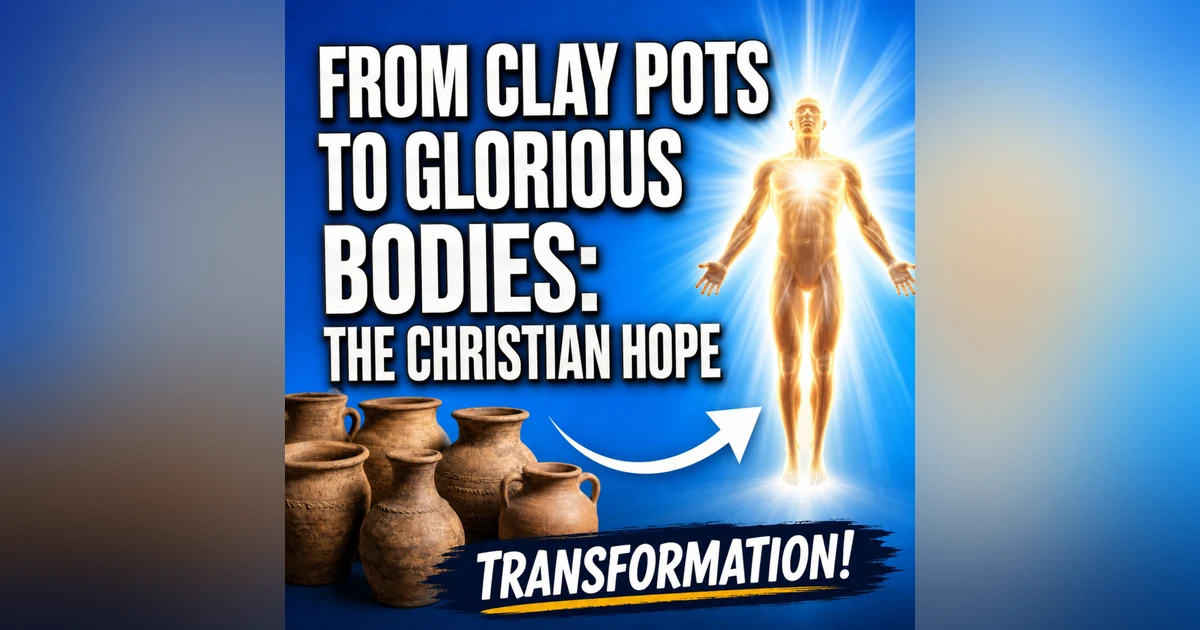


The central theme of our discussion revolves around the profound understanding that our physical bodies, likened to fragile clay pots, are impermanent vessels that serve a greater purpose in the divine narrative of existence. We delve into the teachings found in Second Corinthians, specifically chapter five, where the Apostle Paul articulates the transient nature of our earthly tabernacle and the promise of a glorified, eternal body that awaits us in the heavens. This episode encourages us to maintain an eternal perspective, recognizing that while our earthly struggles may seem overwhelming, they are merely fleeting compared to the enduring hope we possess in Christ. Furthermore, we explore the significance of not being overly concerned with our physical form, emphasizing that our true essence lies in the spiritual treasures entrusted to us. Ultimately, we are called to live with intention, laboring for the acceptance of God, and focusing on the eternal rather than the temporal.
Takeaways:
- The present body is merely a fragile vessel, not the final form we will inhabit.
- Our ultimate aspiration should be to please Christ in all our actions and endeavors.
- The Holy Spirit serves as an earnest, guaranteeing our future resurrection and eternal life.
- We should focus on the spiritual treasures within us rather than the earthly 'clay pot' we inhabit.
- Life's trials are temporary, yet they prepare us for the eternal glory that awaits us.
- The desire for Christ and eternal life should surpass our natural fear of death.
Thank you for joining our podcast. Visit our website at https://middletownbaptistchurch.org/
Subscribe to our YouTube at https://www.youtube.com/@middletownbaptistchurchde5091
Follow us on Facebook https://www.facebook.com/MBCDelaware
This podcast is produced by Ralph Estep, Jr., host of Financially Confident Christian, a daily podcast on Christian Finance you can find it at https://www.financiallyconfidentchristian.com
00:00 - Untitled
00:11 - Introduction to Second Corinthians
05:43 - The Fragility of Our Earthly Bodies
10:24 - The Hope of Resurrection Bodies
19:34 - The Natural Desire for Life
24:11 - The Spiritual Hunger of Man
30:00 - The Assurance of the Spirit
35:11 - Living for Acceptance: Stewardship and Responsibility
Actually turn in your Bibles tonight to second Corinthians.
Speaker ASecond Corinthians, chapter 5.
Speaker AForeign.
Speaker AIn verse number one, the Bible says, for we know that if our earthly house of this tabernacle were dissolved, we have a building of God, house not made with hands eternal in the heavens.
Speaker AFor in this we groan earnestly desiring to be clothed upon with our house which is from heaven.
Speaker AIf so be that being clothed, we shall not be found naked.
Speaker AFor we that are in this tabernacle do groan being burdened not for that we would be unclothed, but clothed upon, that mortality might be swallowed up in life of life.
Speaker ANow he that hath wrought us for the self same thing is God, who also hath given unto us the earnest of the spirit.
Speaker ATherefore we are always confident, knowing that whilst we are at home in the body, we are absent from the Lord.
Speaker AFor we walk by faith, not by sight.
Speaker AWe are confident, I say, and rather willing.
Speaker AWilling rather to be absent from the body and to be present with the Lord wherefore we labor that whether present or absent, we may be accepted of him.
Speaker AFor we must all appear before the judgment seat of Christ, that everyone may receive the things done in his body according to that he hath done, whether good or bad.
Speaker ATonight the message is simple.
Speaker ADon't get too concerned with your clay pot.
Speaker ALet's pray and we'll.
Speaker AWe'll start.
Speaker AOur Heavenly Father, thank you so much, Lord, for the grace that you give to us.
Speaker AThank you for the encouragement of your word as we go through life's trials and the daily grind of life, Lord, the overwhelming aspects of it, Lord, that just threatening to cause us to run and hide and tear, Lord, and I just pray that you would help us tonight to see out of your word in the life of Paul and the life of other Christians, Lord, and look at our own life and how we are to as people of a heavenly city of a heavenly calling, Lord, to have our mind set on the things above, Lord, rather than the things here on this earth.
Speaker AWe ask that you would help us tonight to understand your word better.
Speaker AIn Jesus name we pray.
Speaker AAmen.
Speaker ADon't get too concerned with your clay pot.
Speaker AIn second Corinthians here, Paul, he begins talking about something that is monumental to this life.
Speaker ALiving in the.
Speaker AThe Christian walk.
Speaker AWe have those slides up for, for that, for that sermon.
Speaker AI think it's at the bottom.
Speaker AI'm gonna click through it.
Speaker AGive us a visual, visual representation of that.
Speaker AIt should be loaded in there at the bottom on the left.
Speaker AUnless they clicked off of the list.
Speaker AWell, while they're figuring that out, maybe or maybe not.
Speaker AWe'll get something tonight.
Speaker AWhenever Paul speaks about this, he had already spoken about this tabernacle that we dwell in.
Speaker AAnd he says here in this very first verse.
Speaker AFor we know that if our earthly house of this tabernacle were dissolved.
Speaker ANow what is he talking about there?
Speaker AHe's talking about our body.
Speaker AHe's talking about this tabernacle.
Speaker AHe's talking about how we one day have a mansion in heaven.
Speaker AAnd a lot of people think that whenever you get to heaven, you're going to get this big house and it's just going to be grand and gorgeous.
Speaker AIt's going to be a mansion.
Speaker AI really don't think it's going to be a house.
Speaker AI think it's going to be a body and it's going to be like a mansion, especially compared to.
Speaker ATo this raggedy thing that we are walking around in.
Speaker AIt is a mansion in comparison.
Speaker ANow, this present body, as many of us know, is fragile.
Speaker AI can't tell you how many times I've cut myself this past week alone trying to get the.
Speaker AThe simplest little things and just the.
Speaker AThe pain that ensues when you're just trying to do stuff around the house.
Speaker AI've hit myself with hammers, I've smashed my fingers.
Speaker AI ran into boxes.
Speaker AJust this is.
Speaker AI'm bleeding all over the place.
Speaker AThe body is extremely fragile.
Speaker ANow this sermon itself came out of a different trial that I went through a couple of years ago and that I was encouraged in.
Speaker AAnd this was some.
Speaker AA passage that really stuck with me.
Speaker AAnd I think that it's going to stick with all of us in a special way, especially depending on how fragile you are or how old you become, you start to feel that fragile ness of life.
Speaker AThe present body is fragile, but the next we'll get it up there eventually.
Speaker AThe present body is fragile, but the big thing about it is it is not final.
Speaker AThis isn't all there is is what I wrote.
Speaker AThe new one is far better.
Speaker ANow look here at what he says.
Speaker AFor we know that if our earthly house of this tabernacle.
Speaker ANow that's not an if of hey, it might might happen or it might not happen.
Speaker AThe.
Speaker AThe word here that is used, the grammatical use of it is a potential action, action that is to occur.
Speaker AThis is going to happen.
Speaker AIt's not a matter of if it could happen.
Speaker AWe're not really sure.
Speaker AIt's in the sense of it's could be today and could be tomorrow, or it could be next week, but it is going to come.
Speaker ASo if when this body is dissolved, destroyed, demolished, taken down, we have this treasure in an earthen vessel and that's where we get that clay pot.
Speaker AWhenever, whenever I was diagnosed with Ms. And all the stuff that happened with that, my former pastor, what he told me was Ethan trying to encourage me.
Speaker ADon't get too concerned with your clay pot.
Speaker AIt's just a clay pot.
Speaker AThat's all your body is.
Speaker AThat's all it is.
Speaker ATo the, to, to this lot.
Speaker AWe live in a clay pot.
Speaker AIt's not a shiny vessel of gold.
Speaker AIt's not per se.
Speaker AA thing that is going, is decorated, that's going to last forever.
Speaker AYou know, whenever we talk about what a wedding band should, should be made out of, we want it to be made out of precious gems and something sort of precious metal that will last.
Speaker AThe body that we dwell in is not permanent vessel, it is sown in dishonor.
Speaker AIt is going to be resurrected in something glorious in that mansion.
Speaker ASo don't get too concerned with your clay pot.
Speaker AWe have a spiritual body not made with hands like Jesus being prepared for us.
Speaker AIn Mark chapter 14, Jesus speaks of this, says destroy this temple that is made with hands and within three days I will build another not made with hands.
Speaker AWhat was he speaking of?
Speaker AHe was obviously speaking of that new resurrected body.
Speaker AIn first John chapter three.
Speaker AWe get a great hope, beloved.
Speaker ANow are we the sons of God.
Speaker AAnd it does not yet appear what we shall be.
Speaker ABut we know that when he shall appear, we shall be like him, for we shall see him as he is.
Speaker AAnd so when Paul speaks of that resurrection body, it is a spiritual body, he doesn't mean an unreal body or a non physical body.
Speaker AHe is talking about the same kind of body that our risen Lord had.
Speaker AWhenever he appeared before the disciples in the upper room, whenever he ate, whenever he had the honeycomb, the fish, he asked for something to eat and drink.
Speaker AI mean there was is a physical body, but it is a glorified body raised by the power of God, no longer ruled by weakness, decay, sickness, sin and death.
Speaker AThere are people that are born in so many different ways with a body that is sometimes at birth immediately handicapped, not able to walk from birth.
Speaker AThere was people who was healed in, in the Bible.
Speaker AHow, what, what sin did this man do or what sin did his parents do that he was born lame?
Speaker AThe people asked, said nothing, he didn't do that.
Speaker AIt was just to work the work of God.
Speaker ABut this man was definitely born this way.
Speaker AOne man was born blind.
Speaker ASo many people are born handicapped or become handicapped or you get to a point in your life whenever the body just doesn't work anymore.
Speaker AAnd that can happen.
Speaker AAnd when you're 7 years old, that can happen.
Speaker AIn your 30s, that can happen whenever you're 60 and 8.
Speaker AWe never know when our body may give out.
Speaker AWhenever I got.
Speaker AWell, we didn't get the diagnosis that I had in us.
Speaker AIt just started a whole bunch of stuff happening.
Speaker AI couldn't walk anymore.
Speaker AOkay, that was a moment of failing.
Speaker AThat was a moment of thinking, okay, what in the world's going on?
Speaker AThere's those moments whenever you can't really fathom what God is doing, but you were trying to figure out what is going on with this body.
Speaker ARomans, chapter 8, verse 23.
Speaker AWhat we are waiting for is the adoption, to wit, the redemption of our body.
Speaker AWe are waiting for that adoption.
Speaker AAnd so my first encouragement to us tonight is, don't be so concerned with the clay pot, because we can worship that clay pot.
Speaker AWe can get all in a bind over what it is.
Speaker AAnd what we really forget is what God has made us to do and what that vessel our body is meant for.
Speaker AThe present body is not final.
Speaker AThat is a hope that is looking unto the redemption of our body.
Speaker AAnd in the first letter in Corinth to Corinth, Paul discusses the great difference between these two bodies.
Speaker AHe talks about that in First Corinthians, chapter 15.
Speaker AThis body that is sown, imperishable, it is raised imperishable.
Speaker AIt is sown in dishonor, it is raised in glory, is sown in weakness, it is raised in power, is sown in a natural body, it is raised a spiritual body.
Speaker ABut make no mistake, the clay pot is not the whole story.
Speaker AWhat we are looking at is not the clay pot, but rather the treasure in that pot that we have been entrusted with.
Speaker AWhat is that treasure?
Speaker AGive me some feedback.
Speaker AWhat is that treasure?
Speaker AThe soul.
Speaker AYes.
Speaker AWhat have you been entrusted with?
Speaker ASoul?
Speaker AAs a Christian, what have you been entrusted with?
Speaker AThe Holy Spirit.
Speaker ATo deliver the gospel to other people so that they can have the Holy Spirit, so that they can know Christ and see that treasure that we have in earthen vessels, as Paul talks through there in chapter four of 2 Corinthians was what Paul really wanted them to focus on.
Speaker AGo there.
Speaker AThat one chapter over in second Corinthians, chapter four, what does he say?
Speaker AI am in first Corinthians that's responded.
Speaker AHe says, for we are carrying about in our bodies the Dying of the Lord Jesus, being made a sacrifice for Jesus's sake.
Speaker AHe says that we have the treasure in this earthen vessel.
Speaker AHe said, we're troubled on every side, yet not distressed, perplexed, speaking about the life of a Christian and this weak, weak tabernacle.
Speaker AAnd it's interesting the way that this is interpreted.
Speaker AIt's a tent, you know, when you think about building a house, you don't think about building a tent.
Speaker AAnd that's what this house is like.
Speaker AIt is like building a tent.
Speaker AWhereas we sometimes refer to it as this great and glorious temple.
Speaker AIt's a tent.
Speaker AThis was a pot.
Speaker AIn the power of the Gospel, that treasure in earthen vessels lies within that.
Speaker AThat.
Speaker AThat pot that's cracked, it has holes in it.
Speaker AIt's trying to shine forth the glorious gospel of Jesus Christ.
Speaker ABut the point is, the clay pot is not permanent.
Speaker AIt's fragile.
Speaker ABut what's coming will be glorious.
Speaker ASo whenever we start talking about that, okay, now we are thinking about, okay, this is temporary, and one day we're going to have that permanent, and we're going to live.
Speaker AWe're living for the permanent.
Speaker AWe need to have our mindset on the permanent, on the affection of things above.
Speaker AThere's almost this other side of it that some people sometimes get the impression of, so what?
Speaker AWhat is it?
Speaker AWe're just waiting to die.
Speaker AIs that the point of Christianity?
Speaker AIs that what we are to look for is this a longing for death?
Speaker AAnd the answer to that is no, the Christian does not long for death.
Speaker AThey long for Christ.
Speaker ASo we get this question, is this an unnatural desire?
Speaker ABecause Paul talks about death and desiring to go and be with Christ in many of instances, he desires it over in Philippians, remember in Philippians chapter one says, I'm in betwixt the two, having a desire to depart and be with Christ, which is far better, rather than be in this cursed world, but rather be with him, or rather to be with you and to be able to teach you and exhort you into see fruit in your lives.
Speaker ASo the question is, do we wish to die?
Speaker ALook there in verse two.
Speaker AFor in this we groan earnestly, desiring to be clothed upon with our house which is from heaven.
Speaker AIf so be that being clothed, we shall not be found naked, for we that are in this tabernacle do groan.
Speaker ASome of us are groaning tonight being burdened, not that for that we would be unclothed, but clothed upon, that mortality might be swallowed up in life.
Speaker ASo you see what Paul is saying here.
Speaker AWe.
Speaker AWe want to be found clothed in that glorious temple.
Speaker AWe don't desire to be unclothed in the sense of having no body and just being some spirit that is.
Speaker AThat is just free and reigning.
Speaker AThat's.
Speaker AThat's not what he's saying.
Speaker AWe're not desiring that emptiness.
Speaker AWe are desiring to be clothed with that imperishable, that mortality might be swallowed up of life.
Speaker AThis the natural desire of a Christian to desire Christ, longing for Christ.
Speaker AAnd so that is the ultimate plan you've heard of.
Speaker APeople say everybody wants to go to heaven.
Speaker AAin't nobody wants to go right now.
Speaker AOftentimes that's what people joke about.
Speaker AThe idea, though, that we want to go to heaven.
Speaker AThe idea is not necessarily of going to a place, but rather going and being with a person.
Speaker AA dentist had a patient in his room and started to talk to him about different things.
Speaker AAnd somehow heaven got brought up and he began speaking to this guy and witnessing to him about heaven.
Speaker AAnd this guy said, well, how do you even know that it's going to be good?
Speaker AHow do you even know what it's going to be like?
Speaker AAnd he said, well, I don't.
Speaker AI said, well, you're just hoping for nothing.
Speaker AAnd the guy said, well, let me show you.
Speaker AHe went to the back office door and he tried to open the door.
Speaker AAnd the door was kind of wedge a little bit, and he had to push on it.
Speaker ASomething was blocking it.
Speaker AAnd then he opened that door, and finally whatever on the other side was blocking it moved and he opened it up and his dog ran from that room into the room, shot into the room as quick as he could and got right next to his master's feet.
Speaker AAnd the guy said, you see, that dog has never been in this room while there's a patient.
Speaker ABut that dog doesn't really care about the room.
Speaker AThe dog knows that his master is in that room, and that's what he desires.
Speaker AAnd it's the same thing for heaven.
Speaker AI don't really care what heaven's going to be like.
Speaker AI care that my savior's there.
Speaker AThat is the desire heaven can be.
Speaker AHeaven can be just this old earth.
Speaker AWe know we're going to get a new earth one day and that it's going to be a perfect earth where there is no.
Speaker ANo sickness and famine and everything is going to be perfect.
Speaker AAnd it's always going to be 73 degrees.
Speaker ANo, I don't know if it's going to be like that or not.
Speaker ABut what I do know is it doesn't matter if it is a place of paradise.
Speaker AIf it's a desert or if it's, you know, if it's negative 20, my wife would not agree to that.
Speaker ABut if my savior is there, it doesn't really matter because I want to be with my savior.
Speaker AIs that is the desire that we are to have.
Speaker AWhat is natural though?
Speaker AYou know, the natural inclination that you are bent to.
Speaker AWe've talked about that a little bit.
Speaker AYou know, every single year, certain birds have a built in instinct to migrate south for the winter.
Speaker AWe see cartoons that talk about that.
Speaker AWe know birds do that.
Speaker AThat's the reason why people in Florida can duck hunt.
Speaker ABecause ducks, they migrate south for the winter.
Speaker AThey fly down there trying to look for food.
Speaker AOnce they can't beat the ice in the winter anymore to get food, they fly south for food.
Speaker AMany birds do that.
Speaker AWhat is natural.
Speaker AHumans have a natural desire not to die.
Speaker ADid you know that?
Speaker AThat is a very natural thing not to die.
Speaker ALife clings to the final breath.
Speaker ATo want to live is natural.
Speaker AThe heart itself beats out of its own volition.
Speaker AYou do not make your heart beat.
Speaker AThe heart beats on its own.
Speaker AYou know, whenever doctors get that defibrillator, because guy's heart stop and he gets it, we're going to restart the heart.
Speaker AThat's not true at all.
Speaker AI don't know how many of you were underneath that impression.
Speaker AI was underneath that impression.
Speaker AThe heart starts whenever they, you know, clear.
Speaker AThat's not what's happening.
Speaker AThere is nothing that can start a heart.
Speaker AThe heart has to start on its own.
Speaker ADefibrillators are only there to correct an irregular heartbeat, to get it onto a regular track.
Speaker AIt does not start the heart.
Speaker AI was absolutely floored when I heard and learned that heart has to start on its own.
Speaker AMy.
Speaker AI heard about this first, though, whenever my dad had open heart surgery and whenever we were speaking about different doctors performing heart surgery.
Speaker AIn heart surgery, they stop the heart in order to operate.
Speaker AThat's how they do it.
Speaker ABut the doctors, they seal everything up.
Speaker AThey close it.
Speaker AThey know, they remove their tools that are keeping the heart from beating.
Speaker AAnd then they wait.
Speaker AAnd that person's heart has to restart all on its own, out of its own volition.
Speaker AThat is natural.
Speaker AThat is the natural desire.
Speaker AAnd if that person has no will to live, that person's heart does not start.
Speaker AAnd so that's where you get some of those emotional theater movies live.
Speaker ACome on, you know you want to live.
Speaker AYou know, it's that aspect.
Speaker ABut that's the natural, the desire to live.
Speaker AIs something that the heart desires to do.
Speaker APaul would talk about departing and dying many times in his letters.
Speaker ASometimes he thought it was now, sometimes he thought it was later.
Speaker ASometimes he thought, I will continue on to be able to see you and produce, see more and more fruit.
Speaker AThe problem with fallen man and the fallen mindset that would pervade even Christians is not that man has no hunger for life.
Speaker AThe problem is that sin has twisted that hunger, twisted the desire to understand what it means to live.
Speaker AWhat was man designed to do?
Speaker AWell, he was made to hunger for God.
Speaker AMan was designed for spiritual things.
Speaker AMan was designed to crave spiritual things because God is a spirit and God and man is made in God's image.
Speaker AAnd yet what do we see man doing in his flesh as he craves spirit?
Speaker ASpiritual things, we see idolatry, we see demon worship, we see all manner of things that people love being spiritual.
Speaker AThat's the reason why the Catholic Church today is so prevalent, so attractive, if you will, because of the physical manifestations of religion, the physical manifestation of holy relics.
Speaker AMy faith being sight, touchable.
Speaker ASpiritual people love to be spiritual.
Speaker APeople love to do that.
Speaker AIt's.
Speaker AIt's almost tangible.
Speaker AYou know, there's a.
Speaker AThere's a problem with someone who has a twisted appetite.
Speaker AYou ever heard of children that eat glue?
Speaker AYeah, or eat weird things.
Speaker AIt's a medical condition called pica, where.
Speaker APica is where people crave and eat things that are not food.
Speaker ADirt, clay, paint chips, soap, glue.
Speaker AEver watch my strange addiction I had?
Speaker AThere was one lady on my strange addiction, she liked eating deodorant.
Speaker AJust sing.
Speaker AWe.
Speaker AHave you ever tasted deodorant just by accident, Just raise of hands.
Speaker AHow many of you, you know, you accidentally had a little bit, then you did something right?
Speaker AWhat's.
Speaker AOh, it's horrible.
Speaker AThis lady eats deodorant.
Speaker AHumanity has a deep natural hunger for spiritual life.
Speaker ABut sin twists it into unnatural cravings, idolatry, greed, lust.
Speaker AThings that can never nourish our soul.
Speaker AWhat is that song that Mick Jagger wrote?
Speaker ACan't get no Satisfaction.
Speaker ADude that could have everything, couldn't get any satisfaction.
Speaker AHe decided to write a song about it, you know, Ripley's Believe it or Not.
Speaker ARipley.
Speaker AHe was not a good looking guy at all, but he was a man that had it all.
Speaker ARipley had so much money, so much fame and fortune.
Speaker AHe literally every single pride, every single.
Speaker AThe besetting sins of the flesh, the pride of life, lust of the eyes, the lust of the world.
Speaker AHe had it all.
Speaker AHe could do whatever he wanted to Go do.
Speaker AHe could have whatever he wanted.
Speaker AHe could buy whatever he desired.
Speaker AHe had it all.
Speaker ABut he lived his life in great dissatisfaction.
Speaker AWhy Filling the heart with things that don't belong.
Speaker AThe Christian does not long for death.
Speaker AHe longs for Christ.
Speaker ADeath is not the treasure Christ is.
Speaker ADeath is only the doorway that leads to Christ.
Speaker AAnd that is what we have to remember.
Speaker AThat he as God gives us that desire for himself in us as a gap in our hearts.
Speaker AAnd we cannot try to fill that gap with stuff of the world.
Speaker AAnd this is where don't get concerned with your clay pot comes up.
Speaker AWe often will get concerned with the stuff that we have or the condition of our body.
Speaker AAnd it gets our eyes and our focus off of Jesus.
Speaker AFirst Corinthians, chapter 15 says, for this corruptible must put on incorruption.
Speaker AThat is the desire.
Speaker ADeath is the way to it.
Speaker AOh, there it goes.
Speaker AIt does work.
Speaker AI will fix that by the time next week whenever I get that new USB reader.
Speaker AWe understand that death doesn't have the same hold on us as it did before salvation.
Speaker ANow I'm gonna say something that I want you to take with a.
Speaker AJust a.
Speaker ADon't get overly thinking about this.
Speaker AWhenever someone dies, we mourn with that person.
Speaker ABut we don't mourn as the world mourn.
Speaker AAnd the question is why?
Speaker ADoes that mean that we're heartless?
Speaker ANo.
Speaker AWhenever my uncle died this past year, past August, been almost a year now, we knew exactly where he went.
Speaker AWe knew his testimony, we knew his life, we knew what he believed, we knew he was following Christ.
Speaker AThere's great comfort in that.
Speaker ATo go.
Speaker AThere's a huge difference between someone who has died without Christ, someone who has died with Christ, and we don't mourn as those who have no hope.
Speaker AThe Bible says we don't mourn.
Speaker AWe still mourn.
Speaker AWe still grieve.
Speaker AIt is absolutely right for us to grieve because death is the enemy.
Speaker ADeath is the absolute enemy of us.
Speaker AAnd the Bible says death will be the last enemy defeated one day.
Speaker AThere will not death.
Speaker AThat is what we will rejoice over.
Speaker ABut whenever it comes to understanding that death doesn't have a hold on us, there in First Corinthians, chapter 15, he says, Death is swallowed up in victory.
Speaker AO death, where is thy sting?
Speaker AO grave, where is thy victory?
Speaker AThe sting of death is sin, and the strength of sin is the law.
Speaker ABut thanks be to God, which give us victory through our Lord Jesus.
Speaker ABe steadfast therefore, Christian, unmovable, abounding in the works of the Lord.
Speaker AThe Spirit of God is given to us for those moments of comfort.
Speaker AThe Spirit is God's guarantee that the resurrection is coming.
Speaker ALook there in verse 5 of 2 Corinthians, chapter 5.
Speaker ANow, he that hath wrought us for the self, same thing is God, who also hath given unto us the earnest of the Spirit.
Speaker AThe earnest.
Speaker ASuch a good word.
Speaker AIt's.
Speaker AIt's mentioned multiple times throughout the letters of Paul in the.
Speaker AIn the New Testament to help us understand what we are given at the moment of salvation.
Speaker AAnd that is, as you've already said a couple times, the Holy Spirit.
Speaker AWe are given the earnest of our salvation.
Speaker AYou know, we had to put down money to get the house that we purchased over here.
Speaker AWe had to put down in earnest.
Speaker AWhat was that?
Speaker AEarnest?
Speaker AWhat did that mean?
Speaker AWell, as you know, the earnest says, I'm putting money.
Speaker AI'm putting down something.
Speaker AI'm putting my money where my mouth is and I am going to come and collect.
Speaker AIt was a guarantee.
Speaker AThey would often do these seals of king would.
Speaker AWould mark his seal, and it was the earnest that, this is mine and I'm going to come and collect it.
Speaker AWe are given the earnest of the Spirit.
Speaker AWe are given the down payment, the guarantee that we will be collected.
Speaker AWe have that guarantee.
Speaker AYou can't lose that guarantee.
Speaker AYou cannot forego that guarantee.
Speaker AGod will not let you forego that guarantee.
Speaker AYou are in his hand.
Speaker AHe has given that to us.
Speaker AHe's prepared us for this very thing.
Speaker AThe one who has done this is God.
Speaker AAnd he has given that Spirit to us as the guarantee.
Speaker AHe did not merely promise resurrection, he placed his Spirit inside of us to guarantee that what he started, he will finish.
Speaker AIn Ephesians 1:13, it says, we are sealed with the Holy Spirit of promise.
Speaker ASealed in Romans, chapter 8:11.
Speaker AThe Spirit who raised Jesus will quicken your mortal bodies with the Spirit.
Speaker AThe Spirit.
Speaker AWhat shall separate us from the love of Christ?
Speaker ANothing.
Speaker AWhy?
Speaker ABecause we are sealed with the Spirit until the day of redemption.
Speaker ASo the Spirit inside you is proof that God is not finished.
Speaker AAnd he will perform it.
Speaker AHe will make you, as we read there in first Corinthians, steadfast, unmoved, unmovable, always abounding in the work of the Lord.
Speaker ASo the Spirit is given to us to conform us to the image of Christ and to mold and make us into the image of Christ until the day where our faith is made final.
Speaker ANumber four.
Speaker AWe walk by faith, not by sight, because eternity is certain.
Speaker AOur ambitions must be, therefore to please Christ so to the exhortation that Paul gives us there in first Corinthians, be unmovable, be steadfast, always abound in the work of the Lord.
Speaker AThat's an exhortation to us because eternity is certain.
Speaker AOur ambitions then are therefore looking unto Jesus, the author and finisher of our faith.
Speaker AAnd he is trying to get us to set our affection on things above.
Speaker AAnd he says here in verse number six, therefore we are always confident.
Speaker AConfident, that's that guarantee.
Speaker AKnowing that whilst we are at home in the body, we are absent from the Lord.
Speaker AWe can always be confident that, yes, we have our body, but that just means we're away from God.
Speaker AAnd then number two, we walk by faith, not by sight.
Speaker AThat is a way of life in all areas of our life.
Speaker AAnd we are confident, I say, and willing rather to be absent from the body to be present with the Lord, than to therefore.
Speaker AFor we labor that whether present or absent.
Speaker AAnd this is the exhortation we may be accepted of him.
Speaker AWhy we must all appear before the judgment seat of Christ, that everyone may receive the things done in his body according to that he hath done, whether it be good or bad.
Speaker ANow, I. Grandpa, He was a good old Southern preacher, is what he was.
Speaker AAnd he talked about the judgment of God, Judgment, seat of Christ.
Speaker AAnd this is one aspect as Christians that we will sometimes forget and not keep in mind.
Speaker ANow, understand, what does the judgment seat of Christ mean?
Speaker AWill we be judged for our sin?
Speaker AWe got a good shaking hands.
Speaker AGood, you're shaking your head.
Speaker ANo, no, we won't be judged for our sins as Christians.
Speaker AThat sin has been paid for.
Speaker AThat debt is gone.
Speaker AWe live by faith, though not by sight.
Speaker ATherefore, one day there is a judgment, and it is a judgment.
Speaker AIt doesn't matter that you're.
Speaker AYou're accepted.
Speaker AYou still want to be judged, worthy.
Speaker AWe all desire to hear that.
Speaker AWell done, thou good and faithful servant man.
Speaker AWhen we think of our God and what he has done for us, whether or not to.
Speaker ATo please him should be our highest goal and desire.
Speaker AAnd you think about Stephen and the.
Speaker AThe applause, the well done that Stephen received.
Speaker AAs far as we know, we don't know what other Christians have gotten it.
Speaker AI'm sure there have been many, but we get to read about Stephen.
Speaker AStephen got a standing ovation for his preaching right before he died, when he was preaching to the Pharisees, right before they stoned him in Acts, chapter eight.
Speaker ARight before that, he said, I see the Son of Man.
Speaker ANow, where do we know the Son of Man is?
Speaker AHe is Sitting on the right hand of the Father on front sitting, Stephen said, behold, I see the Son of God standing on the right hand of the front.
Speaker AThe guy got a standing ovation.
Speaker AThat is should be our desire as Christians.
Speaker AWhy we're going to talk about in Sunday school, are you living for the acceptance of God or are you living from the acceptance of God?
Speaker AWe don't do things in this life for the acceptance of God.
Speaker AWe don't do it so that he will love us.
Speaker AWe do it because he does love us, because he is merciful, not so that he will give us mercy, but because he is giving us mercy.
Speaker AOur earthly existence is a period of stewardship and where we are called to labor in this life, not for our own glory, not for our own material gain, not to become accepted by Christ, but because we are already accepted in Christ.
Speaker ASo therefore, whatever we do, we labor that we should be accepted of him.
Speaker AWe should be pleasing to him, is what that means.
Speaker AWe make it our aim to please him.
Speaker AWe make it our goal to please him.
Speaker AIt is our constant ambition to please God.
Speaker ANot to get acceptance, but from that acceptance.
Speaker AAnd that's a very distinct point that we have to understand about it.
Speaker ASo tonight, what the conclusion of it is is this.
Speaker ALive as a steward who will soon stand before Christ and desire that great proclamation of, well done, thou good and faithful sir.
Speaker AWhat are you a steward of, Paul?
Speaker AHe moves from comfort to responsibility.
Speaker AResurrection, hope does not make us lazy like some of some of the people that were in Thessalonians.
Speaker AThey just got on the top of their house and they said, well, God's going to come back, so we don't have to do anything.
Speaker AIt's not a period of laziness, of, well, we don't have to do anything because we're going to go to heaven one day.
Speaker AIt's, what are you doing because of the gift of salvation?
Speaker AWhat are you doing because of that?
Speaker AAnd that's what he says there in chapter, in verse, chapter four.
Speaker AWe have this treasure in earth and vessels, that the excellency of the power may be of God and not of us.
Speaker AWe are troubled on every side, yet not distressed, perplexed, but not in despair.
Speaker APersecuted, but not forsaken, cast down, but not destroyed.
Speaker AAlways bearing about in the body the dying of the Lord Jesus Christ.
Speaker AThat the life also of Jesus might be made manifest in our body.
Speaker AFor we which live are always delivered unto death for Jesus sake.
Speaker AThat the life of Jesus might be made manifest our mortal flesh.
Speaker AWhat are we doing with the stewardship that God has given.
Speaker AWhat are we doing with this life?
Speaker AIt is just a clay pot but it is going can be worth something in glory.
Speaker AThis raggedy fragile vessel that we indwell can one day give us that.
Speaker AWell done.
Speaker AHow good and faithless.
Speaker ALet's pray.
Speaker AFather thank you so much Lord for the grace that you give us to grow in Christ each day.
Speaker ALord thank you that you are the author and finisher our faith Lord, and that you desire to perfect us Lord, and that you don't leave us alone even though some days we would like to just be left alone wallow in our sin.
Speaker ALord, I pray that you would please by grace, by your mercy.
Speaker ADon't let us do that or come after our hearts Lord, as you always do, or give us the mercy and grace to chasten us to get us closer into your arms.
Speaker APray and ask these things in Jesus name.
Speaker AAmen.


