Anointing a New King: Lessons from 1 Samuel 16

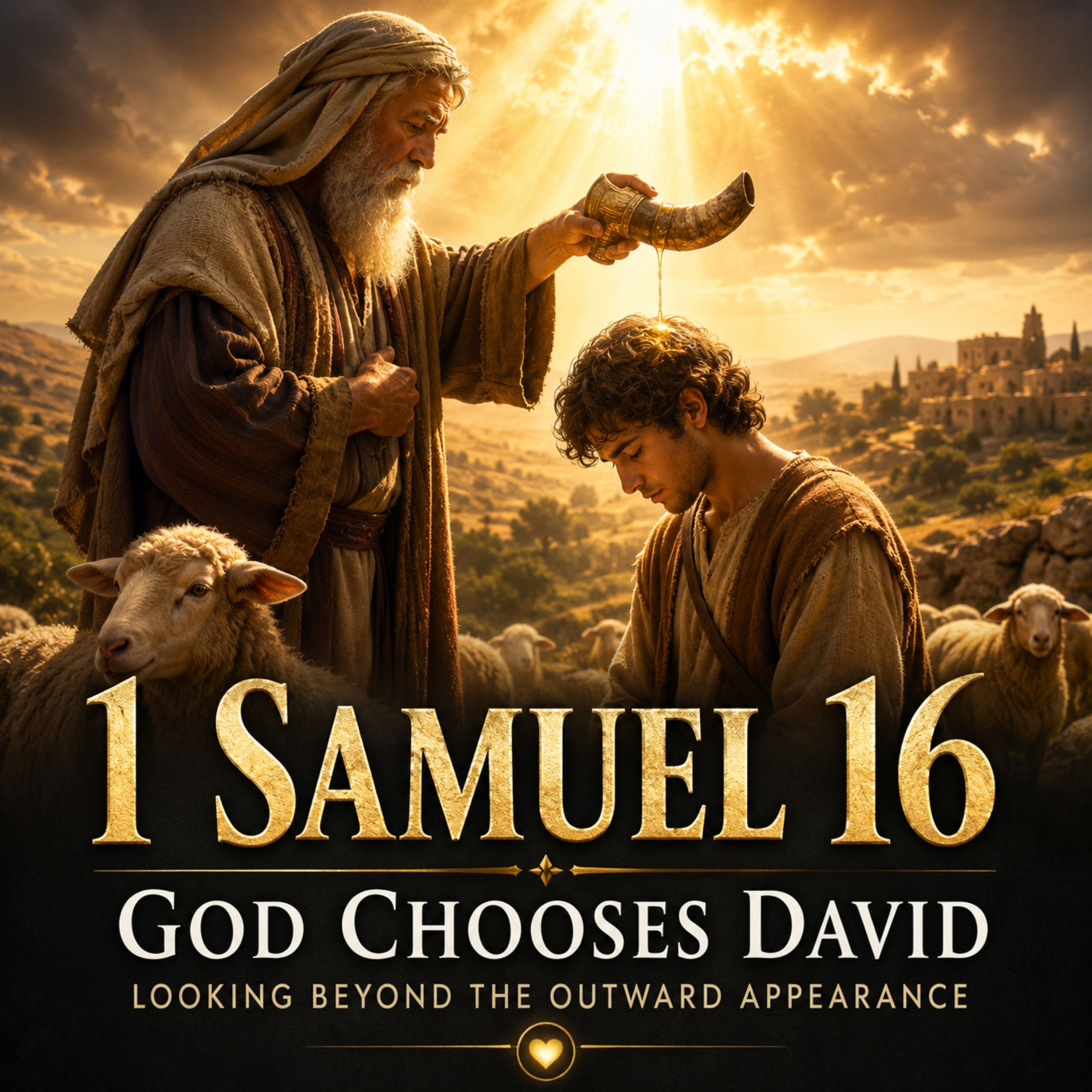


The principal focus of this discussion revolves around the profound lesson extracted from 1 Samuel 16, wherein God instructs Samuel to anoint a new king, thereby emphasizing the theme of divine selection versus human judgment. As we delve into the narrative, we witness the dangers of pride, as exemplified in Saul's life, contrasting sharply with the humility required to receive God's grace. The text elucidates that while Samuel is initially deceived by outward appearances, God's admonition to him—highlighting that He looks at the heart rather than the exterior—serves as a critical reminder for us all. This episode invites us to contemplate our readiness to serve and the willingness to risk for the Lord, reinforcing that true qualification for divine purpose is rooted in the condition of one's heart. Ultimately, we are encouraged to reflect on our own lives, assessing whether we possess a heart that is genuinely attuned to God's will and ready to embrace the challenges that accompany faithful service.
Takeaways:
- In this episode, we delve into the profound consequences of pride as demonstrated by Saul's life, emphasizing the need for humility and reliance on God's grace.
- The narrative illustrates God's selection of David as King, highlighting that divine choice is based on the heart, not outward appearances or societal expectations.
- We are reminded that mourning has its place, yet we must discern when it is time to move forward in faith and obedience to God's calling.
- The discussion emphasizes the importance of taking risks for the Lord, drawing from Samuel's willingness to anoint a new king despite the potential threat from Saul.
- The episode challenges us to consider our own willingness to step out in faith, reminding us that God often calls the unassuming and unqualified to fulfill His purposes.
- Ultimately, our qualifications to serve God hinge not on our abilities, but on our hearts' readiness and willingness to follow His will.
Thank you for joining our podcast. Visit our website at https://middletownbaptistchurch.org/
Subscribe to our YouTube at https://www.youtube.com/@middletownbaptistchurchde5091
Follow us on Facebook https://www.facebook.com/MBCDelaware
This podcast is produced by Ralph Estep, Jr., host of Financially Confident Christian, a daily podcast on Christian Finance you can find it at https://www.financiallyconfidentchristian.com
All right, let's go ahead and start our Bible study here this evening.
Speaker AIf you have your Bibles, turn with me to First Samuel, chapter 16.
Speaker AFirst Samuel 16.
Speaker AAnd we've been studying through First Samuel now for quite some time.
Speaker AAnd one of the things that we've seen for the last few weeks has been a study on the dangers of pride.
Speaker AAnd we've looked at the life of Saul, and we've seen his pride get the best of him.
Speaker AWe've seen his pride control him.
Speaker AAnd certainly we see the same principle in the New Testament when the Bible says that God resists the proud but gives grace to the humble.
Speaker AAnd so certainly Saul, as all of us do, need God's grace.
Speaker AWe're in desperate need of God's grace.
Speaker ABut Saul did not respond in a sense of humility.
Speaker AHe did not respond in a sense of repentance, but he responded in a sense of pride and an obstinate heart, a hard heart against the things of God.
Speaker AAnd if you saw his.
Speaker AHis spiral downward, we saw that his heart eventually got to a place where he was celebrating his own fleshly, sinful actions.
Speaker AYou remember, God called him to wipe out the Amalekites, and he didn't wipe them all out completely, but he was.
Speaker AHe was in his heart, secure in the fact that he did the right thing.
Speaker ABut what happened is, is that his heart of wickedness caused him to have a heart of deceit.
Speaker AHe deceived himself.
Speaker AAnd so in that case, we know that God judges Saul by taking the throne away from him, by not allowing him to be the king forever and not allowing his children to be the king.
Speaker ABut we know that earlier on that God told Saul through Samuel that he would have a king that would be a man after his own heart.
Speaker AAnd that's what we're going to see here in First Samuel, chapter 16.
Speaker AGod is going to select through Samuel the new king.
Speaker AAnd this will be a king after God's own heart.
Speaker AThough he's not a perfect king, he will be a king that desires to have that relationship with God.
Speaker AAnd we know that right away.
Speaker ASaul doesn't just get kicked out of the throne.
Speaker AHe stays there, and he holds on to it for a very long time.
Speaker AAnd we know that David doesn't just come right on the scene and become king, even though he's promised in this chapter that he will be king.
Speaker ASo one of the challenges of going through passages of Scripture that we're all really familiar with is that we just gloss right over the meaning behind much of the text.
Speaker ASometimes we know the story, and we just move right through it.
Speaker ABut I would challenge us all as we go through these next few chapters to really dig in and see the spiritual lessons that we can gain from studying these very familiar stories.
Speaker AAnd they're familiar, familiar stories for a reason.
Speaker AThese stories are familiar because of the simple fact that there are some great amazing truths here in these passages.
Speaker ASo let's look at First Samuel, Chapter 16, and we will go verse by verse through this, and hopefully you will be able to see some things here that we can apply to our own lives.
Speaker ASo first Samuel, chapter 16.
Speaker AIt says, and the Lord said unto Samuel, how long wilt thou mourn for Saul?
Speaker ANow we'll stop there, because that's where we left off in chapter 15.
Speaker AIf you remember, Saul's rebellion led Samuel to mourning.
Speaker AAnd really, it should break our hearts when people turn their backs against the Lord.
Speaker AIt should break our hearts when we see someone who has so much potential, but because of their pride, because of their sin, they do not allow God to work in their life.
Speaker AAnd that would certainly be the case for Saul.
Speaker ASo Samuel had so much invested into Saul.
Speaker AIf you think about how much Samuel had invested into the life of Saul when it came to his prayer, when it came to his anointing, when it came to even his counsel.
Speaker AAnd there might be individuals in our life that we have invested into, that we've prayed for, that we've served, that we've sacrificed for.
Speaker ABut yet at the same time, not always does our work produce fruit.
Speaker ASometimes we serve people, we sacrifice for people, we invest in them, we pray for them, and sometimes they still turn their back against us, and more importantly, the Lord.
Speaker AAnd so what do we do?
Speaker AWell, there is a time for mourning.
Speaker AThe Bible says that there is always a time for mourning, but also there is a time for moving on.
Speaker AIf Samuel would have just stayed in that mournful state, if he would have just stayed and that heart of brokenness, he would not be able to do the next steps that he's called to do when it comes to anointing the new king.
Speaker AAnd so there is that measure of discernment that we all must have when it comes to that measure of how much we're supposed to mourn and how much we're supposed to just move on.
Speaker AAnd I know that's a difficult thing for all of us to have the answers for, and it's different for everybody.
Speaker ABut for this case, we see that God directly speaks to Samuel and asked him, how long wilt thou mourn for Saul?
Speaker ASo this is basically him telling Samuel it's time to move on.
Speaker AAnd when God tells us it's time to move on, it doesn't mean that we forget about what's happened in the past.
Speaker AIt doesn't mean that we write people off.
Speaker ABut what it does mean is that we don't want other people's rebellion to hold us back from what God has called us to do in obedience.
Speaker AAnd so here in verse number one, that question is asked to Samuel, how long are you going to wait?
Speaker AHe says, seeing I have rejected him from reigning over Israel.
Speaker ASo basically what God is telling Samuel is this.
Speaker AI'm telling you to move on.
Speaker AI have a plan.
Speaker AFollow my plan.
Speaker AAnd that's really the difference between passiveness and patience.
Speaker APassiveness is me waiting back and not doing something that God has called me to do.
Speaker APatience is me waiting for God to tell me to move.
Speaker AAnd when he tells me to move, I move.
Speaker AAnd so oftentimes we can sit back, think that, thinking that we're really patient, but it's not patience.
Speaker AWhen God calls us to do something and we don't do it, that's passiveness, and that's a sin.
Speaker AAnd so here Samuel is challenged by God to take the step of moving on by basically saying, I've rejected Saul as king.
Speaker AYou should reject Saul as king and move on and obey me.
Speaker ASo he gives him instructions.
Speaker AAnd when God calls us to do something, he gives us clear instructions.
Speaker AAnd he's giving Samuel very clear instructions.
Speaker AHe says, fill thine horn with oil and go, and I will send thee to Jesse the Bethlehemite, for I have provided me a king among his sons.
Speaker ANow all God tells him is that he needs to fill this horn with oil.
Speaker AAnd we'll talk about the significance of that oil here in a moment.
Speaker AHe says, fill the horn with oil and go to a place called Bethlehem and go to a man named Jesse, because one of his sons will be king.
Speaker ANow, he doesn't tell him everything.
Speaker AHe doesn't tell him which son yet.
Speaker AAnd I think that's important to note that when God does call us to do something in our lives, he might not tell us every detail, but he will tell us certain steps of the way.
Speaker ASo he tells Samuel this much.
Speaker AGo to Bethlehem.
Speaker AGo to Jesse.
Speaker AIt's one of his sons.
Speaker ABut he doesn't tell him which son yet.
Speaker AAnd we know that.
Speaker AAnd so he says, fill your horn with oil.
Speaker AAnd that.
Speaker AThat obviously, for.
Speaker AFor Samuel meant something for us.
Speaker AIt might not mean as much in our culture, but for Samuel, he would have understand what this meant because he knew that God wanted him to anoint someone else as king.
Speaker AAnd so by filling the horn with oil, that meant, hey, I'm ready to anoint a new king.
Speaker AAnd so that's the idea here, that that anointing oil would be the identification of God's selection of a new king.
Speaker AAnd so God will allow us to sometimes understand certain steps of the way and what we're going to do.
Speaker AAnd that's what he does here.
Speaker AAnd he says, go to Jesse.
Speaker ANow, Jesse is an interesting character.
Speaker AWe know Jesse actually is related to a person that you might know named Ruth.
Speaker ASo Ruth and Boaz are Jesse's grandparents.
Speaker ANow, the Bible did say back in Root chapter four, that there would be a great blessing.
Speaker AHe says that there would be this blessing to Ruth.
Speaker AAnd we.
Speaker AAnd if you just read Ruth on its own, you wouldn't know what that blessing completely would be.
Speaker ABut we know the rest of the Bible.
Speaker AAnd we know that David comes from the line of Ruth, who was not an Israelite.
Speaker AShe was from another place.
Speaker ABut God blessed her because of her faith.
Speaker AAnd we know that David's a blessing because the king would come from Rahab's line.
Speaker ABut even in a greater sense, we know that Jesus, the Messiah comes from the line of David.
Speaker AAnd so we know that Ruth had this beautiful blessing from the Lord here.
Speaker AAnd this is the culmination of that.
Speaker AAnd obviously Samuel doesn't know all of these implications yet, but he's going to find out here sooner or later.
Speaker ANow, right away, Samuel has some questions, and I think that all of us would have some questions.
Speaker AAnd again, I think we've talked about this quite a bit.
Speaker AIt's one thing to ask God questions, it's another thing to question God.
Speaker AI think it's completely biblical to ask God questions for clarity, for understanding, for comfort.
Speaker ABut also we do know that it would be a sin to question God and his decisions.
Speaker AAnd so here Samuel says, how can I go?
Speaker AIt's a question that maybe some of us might ask.
Speaker AWell, you, you would say, why is he asking this question?
Speaker AWell, if Saul hear it, he will kill me.
Speaker ASo Samuel knows what's at stake.
Speaker ABy taking this risk of going and anointing another king, God is calling him to do something very difficult here.
Speaker AIt's not like Saul's just going to say, oh, that's great, amazing, you're anointing a new king.
Speaker ALet's celebrate him.
Speaker ANo, Saul is going to fight tooth and nail to keep the line of the throne in his Family name.
Speaker AWe're going to see that as we study first and second Samuel, that there's going to be all of this push to stop David from being king.
Speaker AAnd so what we see here is that God asked Samuel to do something that is a risk.
Speaker AI want us to think just for a few moments about risking something for the Lord.
Speaker ANow, when God calls us to do something outside of our comfort zone, from our perspective, it's a risk.
Speaker AFrom our perspective, there's something at stake.
Speaker AIf I get caught in this case, if I get caught from Saul, what's he going to do?
Speaker AHe's going to kill me.
Speaker AHe's not going to be okay with me anointing a new king.
Speaker ABut from the other side of the coin, think about it.
Speaker AIt's a risk for Samuel, but when God calls us to do something, it's never a risk for him.
Speaker AGod doesn't risk anything because he knows the outcome.
Speaker AHe's in complete control.
Speaker ASo oftentimes when God calls us to do something that we deem dangerous or possibly risky, we might lose something.
Speaker AIf God's calling us to do it, it's not a risk.
Speaker AIt's a risk in trusting him.
Speaker ABut ultimately, when we trust him, there is going to be no failure.
Speaker AAnd so Samuel asked this.
Speaker AHe says, how can I go?
Speaker ABecause if I go, Saul is going to kill me.
Speaker AAnd what did the Lord say?
Speaker AThe Lord says, take a heer with thee and say, I'm come to sacrifice to the Lord.
Speaker ANow this is interesting.
Speaker ABasically, God says, well, you don't have to tell anyone what you're doing.
Speaker AJust go.
Speaker AAnd if anyone asks you, say you're making a sacrifice.
Speaker ANow this isn't God telling Samuel to lie.
Speaker AThis is God explaining to Samuel to use discernment, to use wisdom, and he's really going to make a sacrifice.
Speaker AAnd ultimately we do know that there is going to be a sacrifice here, and we can understand Samuel's fear.
Speaker AI could understand Samuel's fear.
Speaker AAnd there isn't any doubt in my mind that if Saul did find out about this, there would be some major issues and he would consider it to be treason and he would put him to death.
Speaker ABut, you know, at the same time, we have to look at Samuel and we have to see Samuel and go through that process of wrestling with God and coming to a crisis of belief moment and trusting in the Lord.
Speaker AAnd all of us, if we're going to do something for the Lord, have to come to that place in our life where we take that crisis of belief and we act in Faith.
Speaker AAll of us are going to be tested in our faith.
Speaker AIf we are not being tested in our faith, we're not living in our faith.
Speaker AI'm just going to be honest with you.
Speaker AIf you've never been tested in your faith, there's a good chance that you haven't taken a step of faith, faith in the Lord.
Speaker ABecause what I would say is this.
Speaker AIf God is true to his word, which he always is, he says in the New Testament, if we live for him, there will be some measure of persecution.
Speaker AThere will be some level of trials and tribulations.
Speaker AI, I saw this thing on the Internet recently, and they said, if you think you're having a bad day, ask Job if it's bad.
Speaker AAll right?
Speaker ASo, you know, it's all in perspective.
Speaker AIt's all relative.
Speaker ASometimes in our life we think, wow, this is the greatest risk.
Speaker AWe, we, we could never do this.
Speaker ABecause if this doesn't work out, I don't know what's going to happen.
Speaker AThink about all the other people that have trusted the Lord over the years and seen how it's worked for them.
Speaker AAnd I think that that's going to give us the perspective to know that we all are going to have to come to a place in our life where we have to take a step of faith.
Speaker AAnd so was God telling Samuel to lie?
Speaker ANo, he's.
Speaker AHe's not telling him to lie.
Speaker AEverything that he tells him to do is true.
Speaker ASamuel does offer a sacrifice, and it doesn't appear that God ever is telling him, hey, lie.
Speaker ABut he is telling him to the certain extent of use, discernment, be wise as a serpent, but harmless as a dove.
Speaker AThere is a level of being discerning in the truth that we divulge to people around us.
Speaker AAnd so the truth is that that whole situation that God is doing is he's protecting Samuel so that he can do the work of the Lord.
Speaker AAnd so he says in verse number three.
Speaker AThree.
Speaker AOkay?
Speaker ASo he says, tell them that there's going to be a sacrifice.
Speaker AAnd then he says, and call Jesse to the sacrifice.
Speaker ASo he says, have the sacrifice set up.
Speaker AHave Jesse come.
Speaker AAnd he says, I will show thee what thou shalt do.
Speaker ASo this is the first step of faith.
Speaker AHe says, get to that point, and then I'll show you what to do.
Speaker AI don't know for, for you, but for me, I don't like the unknown.
Speaker AOne of the worst things that I deal with in my life, in my own flesh is not knowing tomorrow, not knowing the answer, having to wait for Something, one of the least favorite things that I've ever have to do is like, if someone comes and tells me, hey, I have to have a serious meeting with you, I have a lot of problems.
Speaker ALet's meet in three weeks.
Speaker AAnd I'm like, no, please just tell me everything right now.
Speaker ALike, I'll stop, I'll cancel my schedule.
Speaker AI just want to get this resolved right now because I can't deal with that waiting.
Speaker ABut sometimes God gives us that moment, or more than a moment, maybe a long amount of time where we don't know the certainty of what tomorrow is going to bring.
Speaker AAnd really to the truth of the matter is none of us know really the circumstances of tomorrow.
Speaker AAnd so in this case, he says, samuel, you must go.
Speaker ARegardless of what Saul's going to do, regardless of anybody else, you need to go and get to Jesse.
Speaker AAnd when you do that, then I will tell you.
Speaker ASo really, if he didn't go to that place of offering the sacrifice to Jesse, he would never know what the next step is.
Speaker AAnd for many people, they're not willing to take that first step of trusting the Lord to that point, and they're not going to able to see that second step that God has called you to do, that next step, that, that furtherance of faith.
Speaker AAnd that's really what the Bible says.
Speaker AFaith is not just saying that we believe something.
Speaker AFaith is a belief in our hearts that is manifested, that is demonstrated through our action.
Speaker AIt's this.
Speaker AIt's, Lord, I believe so.
Speaker ASo the action isn't faith.
Speaker AFaith is in our hearts.
Speaker AFaith is what we stand on.
Speaker ABut to prove that we have faith, there's got to be that action.
Speaker AYou've heard me say this before.
Speaker AYou know, I can say all day that I'm the greatest husband, that I'm a greatest father, but it doesn't make me a good father or good husband.
Speaker AWhat makes that is the action.
Speaker ANow, it starts in my heart, but it moves in my action.
Speaker ASo Samuel could have said, lord, I trust you.
Speaker AI know you're going to give me the next step, but I'm.
Speaker AI'm going to do it from here.
Speaker AWell, that wouldn't work.
Speaker ASo him believing that God was going to give him the next word, was him actually moving and doing this, which we see he does.
Speaker AAnd so he says, I'm going to go and I'm going to tell you then.
Speaker AAnd he says, and thou shalt anoint unto him whom I name unto thee.
Speaker AMeaning God is going to give Samuel the name of the one who he is going to anoint.
Speaker AAnd so the first king of Israel was anointed for the people.
Speaker AIf you remember that, it was all about the people, who the people wanted.
Speaker AUltimately, God allowed for it, but it was the king of the people.
Speaker AAnd now we're going to see that this is going to be a king of God's choosing, which shows a completely different path.
Speaker AAnd ultimately we know that God works through this selection of David.
Speaker AAnd David is greatly blessed.
Speaker AAnd that's what's going to happen here.
Speaker ASo verse 4.
Speaker AAnd Samuel did that which the Lord spake and came to Bethlehem.
Speaker ASo this proves Samuel's obedience, and it proves Samuel's faith.
Speaker ASamuel goes to make the sacrifice.
Speaker AAnd so we know that Bethlehem was a small town.
Speaker AIt wasn't very far from where the major city of Jerusalem was and still is to this day.
Speaker AYou knew that Ruth and Boaz are from there.
Speaker AUltimately, we know that Jesus is going to be born in Bethlehem, but Bethlehem is a significant city there in Israel and still lives to this day.
Speaker AAnd then he says, and he says he goes to Bethlehem.
Speaker AAnd the elders of the town trembled at his coming, saying, cometh out peaceably.
Speaker ASo this shows the other side of the coin.
Speaker ASamuel's coming to Bethlehem.
Speaker AAnd they're this little town, and they're like, what?
Speaker AWhat are you doing here, Samuel?
Speaker AWhat are you doing?
Speaker ANow remember, what was the last story?
Speaker AWhat did Samuel do in chapter 15 that might cause some people to panic?
Speaker AWell, if you remember, Samuel just got done killing the king, the Amalekite King, Agag, with a sword in front of everybody.
Speaker ASo right now, to many people's eyes, Samuel is the hand of God's justice upon the the people there.
Speaker ASo think about yourself.
Speaker AIf you're in Bethlehem and you saw Samuel coming your way, just fresh off of slain Agag, the king of the Amalekites, you might be thinking, okay, is he going to do the same thing here?
Speaker AAnd so they're afraid.
Speaker AThey think that God is coming to judge them.
Speaker AThey said, okay, Samuel is bringing his reputation with him.
Speaker AAnd so they tremble and they ask, are you coming peaceably?
Speaker AAnd he said, peaceably, I am come to sacrifice unto the Lord.
Speaker ASanctify yourself.
Speaker ASet aside yourselves and come with me to the sacrifice.
Speaker AAnd he sanctified Jesse and his sons and called them to sacrifice.
Speaker AAnd so the idea was that, hey, Jesse, you and your sons are going to come and we're going to have the sacrifice.
Speaker AThey would watch the sacrifice, they would share in the worship.
Speaker AAnd then at the end of that, Samuel is hoping and trusting in the fact that God would reveal to him who he's going to anoint.
Speaker AVerse number six.
Speaker AAnd it came to pass, when they were calm, that he looked at Eliab and said, surely the Lord's anointed is before him.
Speaker AAnd so we see that Samuel, like any of us would do, sees the Son and he looks at him and thinks, this is going to be the king.
Speaker AEvidently he had all the outward character traits of a king, just like Saul did.
Speaker AHe looked like a good choice.
Speaker AMost likely.
Speaker AHe saw a tall, handsome young man who looked like a good king.
Speaker AAnd we see something really interesting here in verse number seven, because to the eyes of Samuel, who was a.
Speaker AWas a faithful man, Samuel was a man of faith.
Speaker ASamuel was a man of obedience.
Speaker AAnd so we're not gonna fault Samuel here by looking at this young man, Eliab, and thinking, well, obviously he's the king.
Speaker AIt's just natural.
Speaker AHe will look at him and say, this is the king.
Speaker ABut God's gonna give him a lesson here that I think is so important, and I think it's important and lesson for us because we often think that God can only use the ones that make sense, that look the part, that have the experience, that are talented or.
Speaker AOr whatever we think makes a person used by God.
Speaker ABut we're going to see in verse seven, it says, but the Lord said unto Samuel, look not on his countenance, don't look at what the outside looks like, or on the height of his stature.
Speaker ADon't look at how tall he is.
Speaker ASaul was tall.
Speaker AThat.
Speaker AThat didn't equate to a good king.
Speaker AHe says, don't look at his countenance, don't look at his height, because I have refused him.
Speaker AFor the Lord seeth not as man seeth, for man looketh on the outward appearance, but God looketh on the heart.
Speaker ASo Samuel did make a mistake in the fact that he looked at the appearance of Laab and thinking he's the one, obviously, without even searching after the Lord's guidance and looking at what the Lord sees.
Speaker AAnd so we see that God says, no, it's not about what he looks like on the outside.
Speaker AIt's not about how good looking it is.
Speaker AHe is.
Speaker AIt's not about how tall he is.
Speaker AHe didn't have the heart of a king.
Speaker AAnd remember, that's what God's looking at here.
Speaker AGod wanted the heart of a man who was after him, who desired his will, who was willing, who was ready, who was moldable, who was ready to follow him.
Speaker AAnd so though Eliab Looked good, God refused him.
Speaker AAnd we see that verse number seven.
Speaker AGod is stating a fact here.
Speaker AHe says, I don't look on the outward appearance.
Speaker AI look at the hearts.
Speaker ABut we also think of this as a challenge for us, maybe even in our own lives, though we can't see somebody's heart to not just act on what we see in front of us right away, but to seek after someone's heart.
Speaker ANow, we can never see a man's heart, but we certainly, as the Bible tells us, we can know what that man or woman's heart is by being around them and asking them questions and seeing what they love and seeing what they do instead of just making a quick judgment call upon someone by saying, well, they must be godly because they look this way.
Speaker AWe have to be very cautious about that because if we went back to the time of Jesus, we would look at Jerusalem and we would look at these different cities and where will we go for the most religious people?
Speaker AWe would go to the synagogue.
Speaker AAnd if we went to the synagogue, we would find Pharisees and we would find Sadducees and they would look religious.
Speaker ABut we know what Jesus had to say about them because their heart was not in the right place.
Speaker AThey had an exterior of religion, but the inside their heart was not in the right place.
Speaker AAnd so I'm not saying that we don't look on the outward appearance, but we don't judge somebody.
Speaker AAnd ultimately God doesn't judge somebody by the outward appearance.
Speaker AHe looks upon the heart.
Speaker ANow, if the heart is in the right place, the outward will be there.
Speaker ABut what we see is that the outward can be fake.
Speaker AI can put on a mask, I can put on an exterior, I can say certain things, I can persuade.
Speaker AAnd so what God says is, he says, I don't look at that, I look at the heart.
Speaker AAnd you know, oftentimes we're, we're thinking in many ways that somebody who is, what we would say maybe is, you know, they're intelligent or they're charismatic, or maybe they're good looking.
Speaker AAnd we say, well, obviously that person is going to be used by God.
Speaker ALook how many talents they have, look how much potential they have.
Speaker ABut we saw the dangers of that with Saul, right?
Speaker ALook at how tall he is, look at how strong he is, look at how powerful he is, look at all these things.
Speaker ABut we know that Saul's problem was his heart was not in the right place.
Speaker AAnd so we see that, yes, man looks on the outward appearance.
Speaker AThat's natural.
Speaker ABut it's God who looks at the heart.
Speaker ASo even the best of men will maybe even look at the outward appearance, but God looks on the heart.
Speaker AAnd so this is an exhortation for all of us to understand that it doesn't matter if I lack in certain areas.
Speaker AGod can still use me if my heart is ready, if my heart is willing to grow closer to him and let him use me.
Speaker AThink about all the people that God used.
Speaker AMany times, God uses the one that's not the person that we would assume.
Speaker ASometimes God uses the person who we would consider to be the underdog, that we would consider not to be the one that has the most potential.
Speaker AIf you go through the stories, I mean, he took out fishermen.
Speaker AI mean, nowadays, maybe fishermen aren't even today.
Speaker AFishermen are still kind of rough, okay?
Speaker ABut think about Peter and the other fellows that were with them there on the Sea of Galilee.
Speaker AThey were not the guys that everyone was lining up to to say, when you must be the next rabbis, you must be the next.
Speaker AThe next leaders.
Speaker AThey were the ones working out in the Galilee waters and getting fish and probably stinking and doing all that kind of stuff that probably not the average person was interested in doing.
Speaker ABut at the same time, God uses them.
Speaker AGod uses those that have a heart ready for service.
Speaker AAnd so I often think about that and think about, you know, God could have chosen any of these brothers.
Speaker ABut we know ultimately God chooses the one that has a heart ready for service.
Speaker AAnd so for us today, it's not about looking apart.
Speaker AIt's not about having all the academic credentials.
Speaker AIt's not about having our.
Speaker AOur outward appearance all put together.
Speaker AIt's about having a heart ready to be used by God and desiring to be used by God and to know him in a greater, more personal way.
Speaker ASo we see verse number seven.
Speaker AGod tells him it is I who look upon the heart, verse 8.
Speaker AAnd Jesse called Abinadab and made him pass before Samuel.
Speaker AAnd he said, neither hath the Lord chosen this.
Speaker AAnd so all of you know this story, right?
Speaker AAll of the brothers are lined up in front of Samuel, probably from the assumption that, well, here's the next best one, okay?
Speaker ANot him, the next best one.
Speaker AAnd so we see this happen multiple times.
Speaker AWe see it happen with Abinadab.
Speaker AAnd no, the Lord has not chosen Abinadab.
Speaker AVerse 9.
Speaker AThen Jesse made Sham up to pass by.
Speaker AAnd he said, neither hath the Lord chosen this.
Speaker AAnd again, Jesse made seven of his sons to pass before Samuel.
Speaker ASo the way that I envision it in my mind is he starts with the best one and just starts working down the line.
Speaker AAnd Samuel says unto Jesse, lord, have not chosen these.
Speaker ASo this is a confusing moment, probably for Samuel, because he's like, okay, Lord, you made me come here.
Speaker AYou led me to this place.
Speaker ANow it's not making sense to me.
Speaker ALike, I. I'm here.
Speaker AYou've lined up these boys, and each one of them you're saying no.
Speaker AAre you just getting me all the way to Bethlehem to tell me that you've changed your mind, what's going on?
Speaker AAnd sometimes that's how it works with us.
Speaker ASometimes God gets us to a place, and the way that we assume he's going to work does not work the way that he has planned in his.
Speaker AIn his purpose for us.
Speaker AAnd so verse 11.
Speaker AAnd Samuel says to Jesse, are.
Speaker AAre these.
Speaker AAll thy children are here?
Speaker AAll thy children?
Speaker AAnd he said, there remaineth yet the youngest, and behold, he keepeth the sheep.
Speaker AAnd Samuel said unto Jesse, send and fetch him, for we will not sit down till he come hither.
Speaker ASo obviously Samuel recognizes that this is probably the one because of all the other ones haven't been selected.
Speaker AHe's like, are there any others?
Speaker AAnd they go, yeah, there's one, but he's not even here.
Speaker AThey didn't even consider David to be a candidate for being king.
Speaker ANow there's a lot of debate on how old David is at this point in time.
Speaker AMost likely he's very young, probably, you know, a young teenager, if that, or maybe even younger, some think.
Speaker ABut nonetheless, we know that David is young here, and we know that he's unassuming.
Speaker AThis shows that David had no regard within his family.
Speaker AHis father doesn't even mention him by name.
Speaker AAnd we see that he wasn't even invited.
Speaker AWhen he says, hey, Jesse, invite all of your sons.
Speaker AHe doesn't even invite David.
Speaker AHe's left out.
Speaker AMaybe because he was out shepherding or maybe just because they didn't give him any respect.
Speaker ABut either way you look at it, there was an idea here that Samuel goes, well, you need to call him, because I'm pretty sure he's going to be the one.
Speaker AAnd so when we consider David as the youngest and we consider David is probably unassuming.
Speaker AHe wasn't probably strong.
Speaker AHe wasn't big.
Speaker AWe see that, you know, it makes sense.
Speaker AEven in our society today.
Speaker AThe.
Speaker AThere's a lot of people that just kind of fly below the radar.
Speaker AAnd that's exactly what's happening here with David.
Speaker ABut God's going to use him.
Speaker ASo he Says, fetch him, bring him here, verse 12.
Speaker AAnd he sent and brought him.
Speaker ANow he was ruddy and with all of all beautiful countenance and goodly to look to.
Speaker AAnd the Lord said, arise, anoint him, for this is he.
Speaker AAnd so David is out keeping the sheep.
Speaker AAnd we know that ultimately he's being faithful to what God has called him to do at that point in time by obedient to his father.
Speaker AAnd obviously we know later on that he learned a lot of lessons from his sheep keeping.
Speaker AAnd so he's out there doing a servant's job, but ultimately he's obeying the Lord, which means that that's, that's the best thing you could ever do.
Speaker AAnd so David is going to be chosen.
Speaker AAnd we see somewhat of a physical description of David as it says there that he has a ruddy complexion.
Speaker AAnd there's a lot of different interpretations of that ruddy complexion.
Speaker ASome interpretations of that would be fair or he had a fair complexion.
Speaker AOthers would mean another interpretation of that would be that he had red hair and red cheeks.
Speaker AAgain, there's a lot of interpretation there that we don't want to get too caught up on.
Speaker ABut basically the Bible does say that he would be considered attractive.
Speaker AHe, he would have been good looking, as it says there.
Speaker AAnd ultimately God says, okay, it's not about the outward appearance.
Speaker AWe know it's his heart, but that's just a description of him.
Speaker AAnd so he tells Samuel to anoint him.
Speaker AAnd so David is anointed.
Speaker AHe's chosen.
Speaker AAnd so by outward appearances, David was not qualified, but from the inward qualification of his heart, he was qualified and God selected him.
Speaker AAnd so we know what made David the right man.
Speaker AIt was his heart.
Speaker AIt was his desire for the Lord.
Speaker ASo what makes me the right man?
Speaker AWhat makes you the right person for the Lord?
Speaker AWell, it's not about how a attractive we are.
Speaker AIt's not about how many people follow us.
Speaker AIt's not about how hard we work.
Speaker AWhat makes us qualified to be used by God is by having a heart ready for service, to have a humble heart of submission to him and saying, lord, whatever you want from me, I'll do.
Speaker AThink about all the way back at the very beginning of the story of Samuel, right, Samuel was called and he thought it was Eli.
Speaker AAnd eventually he found out that it was God talking to him.
Speaker AAnd he says, lord, I'm ready, I'm listening.
Speaker AWhat do you want from me?
Speaker AAnd that's all what really God wants from us is just to be willing and ready to do what he has for us in our life.
Speaker AI. I remember the day.
Speaker AIt's.
Speaker AIt's unique because there was multiple times in my life where I was like, lord, I want to work for you.
Speaker AI want to serve you.
Speaker ABut I wasn't ready to give him everything.
Speaker AI remember in high school, especially in.
Speaker AIn Christian school, we had so many opportunities to have these speakers come in, and, And I think that most of them, their whole goal was to get us to commit our lives to.
Speaker ATo the ministry, which I think is a.
Speaker AIs a valid cause.
Speaker AI'm not saying that every single person is called to vocational ministry.
Speaker AThat's certainly not the case.
Speaker ABut they would always come in and they'd be like, give your heart to the Lord.
Speaker AGive him everything.
Speaker AAnd I remember going down front and saying, okay, Lord, I'll give you, like, some, but I really want to do some of my own things.
Speaker AYou know, at the time, I wanted to be a professional baseball player.
Speaker AYou know, that shows you how delusional I was.
Speaker AAnd I was like, well, I'll be a professional baseball player then.
Speaker AWhen I'm done and retired, then I'll serve you, Lord.
Speaker ABut let me just do what I need to do there.
Speaker ALet me get accomplished what I need to get accomplished.
Speaker AThat's not submitting myself to the Lord.
Speaker AAnd I remember the day that God really got a hold of my heart and he had to break me to a point where I said, okay, Lord, wherever you want me to go, whatever you want me to do, I'll do that.
Speaker AAnd that's not an easy thing to say.
Speaker ABut it is in many ways a scary thing to say because you don't know what the next step is.
Speaker ABut it's a blessed thing to say because ultimately it's a willing heart to be used by God.
Speaker ANow, God's not going to send everyone to the most dangerous places.
Speaker AI. I know that.
Speaker AThat was always my fear.
Speaker AWell, if I commit myself to the Lord, he's going to send me to, you know, a nation that they spear you as soon as you walk in for the cause of the gospel.
Speaker AAnd I'm like, I don't want to do that.
Speaker AI was scared to do that.
Speaker AAnd the reality is, is that sometimes God does call certain people to those dangerous situations.
Speaker AAnd oftentimes it's the people that said, I will never go there, Lord.
Speaker ADon't send me there.
Speaker AAnd that's.
Speaker AWe had a fella at our old church that he says, lord, I want to be a missionary to you.
Speaker AFor.
Speaker AFor you.
Speaker AI want.
Speaker AI'll go anywhere except for like the heart of Africa that was always like, you know, growing up.
Speaker AThat was like the heart of Africa, all the animals and stuff.
Speaker AYou know, where he ended up becoming a missionary to.
Speaker AHe actually went to Africa.
Speaker AOkay, he, he went, he went to the middle of Africa, Zambia, and then he went to South Africa.
Speaker AAnd, and so the idea would be that sometimes God does use unassuming people for dangerous or risky things in our own perspective.
Speaker AAnd David certainly has no idea what he's signing up for here.
Speaker AAnd really he's not signing up.
Speaker AGod's selecting him and he's agreeing to it.
Speaker ABut David has no idea.
Speaker AHe just hears you're going to be king.
Speaker AAnd does that mean he's going to be king tomorrow?
Speaker ADoes he have to wait?
Speaker ANo, we know that David has to wait a long time and he has to go through a lot of trials and sometimes God's going to call you to do something that it might not come to pass tomorrow.
Speaker AHe might say, hey, I want to use you here.
Speaker AAnd it might be a time of waiting, it might be a time of trial, it might be a place in our life where we actually feel like, well, Lord, obviously you don't have me going here because there's trial after trial after trial.
Speaker ABut what we're going to see with David is that God works through those trials to build him into the king that he needs to be.
Speaker AAnd that's what we're seeing throughout this whole passage.
Speaker AAnd so verse number 13, then Samuel took the horn of oil and anointed him in the midst of the brethren.
Speaker AAnd, and this is the important part.
Speaker AAnd the Spirit of the Lord came upon David from that day forward.
Speaker ASo Samuel rose up and went to Rama.
Speaker ASo what we're going to see in this passage of Scripture is that the Spirit of the Lord comes upon David.
Speaker AAnd so that literal oil anointing is a picture of God coming upon the life of David and guiding him in the Holy Spirit.
Speaker ANow we as Christians are super blessed in the fact that when we trust in the Lord as our Savior, that very thing happens to us, that the Spirit of God comes and lives within us.
Speaker AIt's not just for a time, as many people in the Old Testament got to experience, that God would come upon them and there would be these moments of spirit filled action.
Speaker ABut we as Christians get the unique opportunity to have the Holy Spirit living within us at all times.
Speaker AAnd one might ask then, well, if we're all living with the Holy Spirit, why do we all not just act like David and act like Daniel?
Speaker AAnd act like all these people of great acclaim in Scripture.
Speaker ABecause oftentimes the Bible says that we can be indwelled by the Spirit.
Speaker AThe Spirit lives within us.
Speaker ABut oftentimes, as Christians, we're not filled with the Holy Spirit.
Speaker ABeing filled with the Holy Spirit is something different.
Speaker ABeing filled with the Holy Spirit is that the Holy Spirit is the one driving.
Speaker AI'm not the one driving.
Speaker AI'm obedient to what the Holy Spirit has for me.
Speaker AI'm stepping into places where I would never go on my own accord.
Speaker ABut God's leading me here.
Speaker AGod's testing me here, God's speaking for me here.
Speaker AGod's moving in this way.
Speaker AAnd folks, I cannot describe to someone what it means to be completely guided by the Holy Spirit unless it's experienced.
Speaker ABut what I will say to you is that when the Holy Spirit's guiding you, there's nothing to fear.
Speaker AAnd there's complete confidence in the Lord.
Speaker AThere's complete confidence, control of God in your life.
Speaker AAnd though there might be some uncertainty in our human state, what it is, is like, hey, God's moving me.
Speaker AGod's changing me.
Speaker AGod's given me the words to say.
Speaker AGod's given me the patience here.
Speaker AGod's holding me back from saying the things that I would say before, right?
Speaker AThere's a whole picture of what the Holy Spirit does for our life.
Speaker AAnd we see here that the Holy Spirit comes upon it, says the Spirit of Lord came upon David from that day forward.
Speaker ANow, that doesn't mean that David is sinless, but we do know that David is able to move and do things beyond his own limitations.
Speaker AIf you don't know about that, just go one chapter over.
Speaker AWe're going to study David going out and slaying Goliath.
Speaker ADavid could not and would not have been able to do that.
Speaker AIn his own strength, he was able to do something beyond his own limitations because God was resting upon his life.
Speaker AAnd many other things that David does.
Speaker AHe admits that I could not do this without the Lord.
Speaker AThis battle is the Lord's.
Speaker AThis victory is only because of God.
Speaker AAnd that's what it means for us in our own life.
Speaker AAs Christians, we have to understand that when God calls us to do something that sometimes might be beyond our own human limitations, that he is going to bless us and give us strength.
Speaker AAnd as Philippians 4:13 says, that we can do all things through Christ which strengtheneth us.
Speaker AAnd the idea would be that we don't just do whatever we wanted to.
Speaker AAnd God blesses that.
Speaker ABut if God calls us to do something.
Speaker AHe's going to give us everything that we need to accomplish the things that he's called us to do.
Speaker ASo what do I mean by this?
Speaker AI mean this.
Speaker AGod has a plan and a purpose for each of you.
Speaker AHe really does.
Speaker ANow, for you, it might not mean to go to a foreign country and be a missionary.
Speaker AFor you, it might not be that you're holding vocational, you know, a ministry.
Speaker AEven though it really helped me free myself from the bondage of my fear.
Speaker ALet me tell you something.
Speaker AIn love, you, you don't have enough strength, you don't have enough wisdom, you don't have enough experience.
Speaker AYou don't have all the things to do what God has called you to do.
Speaker ABut the beauty is, is that when you have a relationship with God, he gives you everything you need.
Speaker AHe's going to give you the wisdom, he's going to give you the strength.
Speaker AHe's going to give you the patience.
Speaker AHe going to give you the endurance.
Speaker AAnd so what I would encourage you to do, when we come to these passages of scripture where we see David doing these amazing things, we're going to see David do some really amazing things in his life.
Speaker AAnd we saw, we're seeing Joshua and Moses do amazing things.
Speaker AWe see Daniel doing amazing things.
Speaker AWe look at the New Testament and we see, you know, Peter and Paul and all these people doing things that we're like, wow, that's so amazing.
Speaker AThose people are beyond us.
Speaker ANo, the Bible tells us that all of those people are just like us.
Speaker ABut.
Speaker ABut it was a heart that desired God and his power to rest upon our life.
Speaker AAnd I think a lot of times we sell short the power of God and what we can do, and ultimately what God can do through us.
Speaker AAnd so David is anointed king here.
Speaker AAnd we see so many awesome lessons.
Speaker AAnd so I just want to kind of summarize these lessons and then we're going to be done.
Speaker ABut I will say this.
Speaker AFirst of all, David gets anointed by God through Samuel, through Samuel's obedience.
Speaker ASo one man's obedience to the Lord leads to a great king being selected for service.
Speaker ANow, ultimately, we know that God could have used anybody.
Speaker AAnd if Samuel would have said no, maybe God would have had another man stand up or someone to get to a place where they could have brought that anointing to David.
Speaker ABut Samuel gets to be a part of this because of his obedience.
Speaker AAnd one of the things that I'd like you to think about here this evening is what could you be A part of.
Speaker AIf you're willing to say yes to the Lord.
Speaker AI. I've.
Speaker AI've said no too many times in my life to the Lord, that I'm.
Speaker AI'm not.
Speaker ANot proud of those moments.
Speaker ABut there's been times in my life that I've said no, I can't do that.
Speaker AAnd, and maybe you guys know what I mean by that.
Speaker AMaybe God's really pushing in your heart to help somebody out or pray for somebody or call somebody or.
Speaker AOr teach something or serve in an area.
Speaker AAnd you go, you know, that's.
Speaker AI don't have enough time, or I'm too busy or I'm.
Speaker AOr overwhelmed.
Speaker AI'm not saying for you to neglect the things that God already has you to do, but what I am saying is that there's times in our life where God's pressing on our heart, and we come up with every reason to say no, and we say no.
Speaker AAnd I would just say, what are some of the things that maybe God would have us to be a part of if we just said yes?
Speaker AAnd so are we willing to say yes to the Lord?
Speaker AAnd then secondly, we look at this place of where Saul comes and possibly could kill Samuel.
Speaker AThere's a risk there.
Speaker AAnd Samuel says, no, I'm willing to risk it for the Lord.
Speaker AI'm willing to take that step for the Lord.
Speaker AAnd here's a question that all of us, I think, have to contemplate here this evening.
Speaker AIt's one that I'm contemplating a lot in my life.
Speaker AWhat am I willing to risk for the Lord if it's not.
Speaker AIf it's something that God's calling me to do, it's not a risk, because if God's calling me to do it, it's secure.
Speaker AAnd so what I would say is, on our perspective, what am I willing to risk for the Lord?
Speaker AAm I willing to risk someone mocking me?
Speaker AAm I willing to risk someone rejecting me?
Speaker AAm I willing to risk failing?
Speaker AAnd by the way, if you're serving the Lord, it's never a failure.
Speaker AI can.
Speaker AI can tell you time after time of opportunities that I've had, and then I've just stumbled all over it, and I've said, you know what?
Speaker AI messed that up.
Speaker AI. I messed that sermon up.
Speaker AI was thinking about something else, or I got distracted here, and I was not able to communicate what I wanted to communicate.
Speaker AAnd I felt like a failure.
Speaker AI felt like a.
Speaker AA someone who really fell short.
Speaker AAnd, you know, in those moments, people being nice or people really being honest have Been like, wow, I really needed that.
Speaker AThat was a great help.
Speaker AAnd I'm like, really?
Speaker AYou understood what I was saying?
Speaker AAnd there have been times where I felt like, man, I really nailed that.
Speaker AThat was amazing.
Speaker AAnd nothing, you know?
Speaker AAnd so what.
Speaker AWhat do I mean by that?
Speaker AI mean this.
Speaker AThere's times in our life where we think that we've messed up, that we've failed.
Speaker ABut, folks, if we're in the will of God, it's not a failure, because we're not the ones that are giving the increase.
Speaker AThink about this principle.
Speaker AIt's in First Corinthians, chapter three.
Speaker AI'll summarize it for you.
Speaker ABut you can go there and you can look at it.
Speaker AThere were these people in the church at Corinth, and they were like, I'm from.
Speaker AI'm from Paul.
Speaker ALike, Paul's my guy.
Speaker AAnd then the other guys were like, why?
Speaker AI'm from Apollos.
Speaker ASo Apollos is my guy.
Speaker AAnd Paul comes in and basically checks them on this, and he says, why are you looking at me?
Speaker AAnd Apollos, he was like, we're just ministers of the grace of God.
Speaker AHe says, some water, some plant, but God gives the increase.
Speaker AAnd it's the idea that all of us, anything that happens within ministry, it's not about us.
Speaker AWe get a chance to sow the seed.
Speaker AWe.
Speaker AWe get a chance to water that seed, but we can never produce fruit on our own strength, on our own will.
Speaker AIt's always God who gives the increase.
Speaker AAnd so what do we do?
Speaker AWe faithfully sew that seed.
Speaker AWe faithfully water those plants, and we allow God to do the great work in our life.
Speaker AAnd so if there's a fear of failure, well, I. I could never do that.
Speaker AWell, the truth is, is that we might stumble, but we can't fail if we're in the will of God.
Speaker ASo.
Speaker ASo that's a lesson in and of itself.
Speaker AAnd then we see ultimately that.
Speaker AThat big lesson at the end of that passage where, you know, Samuel walks in and he sees all of these really impressive young men, and he thinks that they're the king.
Speaker AAnd God says, nope, that's not them.
Speaker AThey don't have the heart.
Speaker AThey might look the part, but they don't have the heart.
Speaker AAnd for us, I'd rather be a David than any of these other brothers, right?
Speaker AI. I don't want to look the part, but not have the right heart.
Speaker AAnd that everyone goes, wow, he must be a good Christian.
Speaker ABut then God knows, really what's going on behind the scenes.
Speaker AI'D rather, if I had to choose one or the other, I'd rather please God than anybody else.
Speaker ANow, I don't think that those have to be two different things.
Speaker AI think we can please the Lord and in many ways be a blessing to other people.
Speaker ABut if me being accepted and praised by other people is higher than my desire to honor God, that's where the issue is.
Speaker AAnd so oftentimes that's what it is.
Speaker APeople aren't looking to honor God.
Speaker AThey're looking for other people to notice them and say, well, they must be good Christians.
Speaker AAnd folks, it's okay to notice other Christians.
Speaker AIt's okay to give honor to honor whom honors do.
Speaker ABut at the same time, we want to make sure that we have an audience of one that we're praising and honoring.
Speaker ABecause the truth is that if we're honoring God, everybody else is going to understand.
Speaker AAnd if they don't understand, they aren't people that we want to be pleasing.
Speaker AThat's the truth of the matter.
Speaker AIf.
Speaker AIf people can't.
Speaker AIn your family and your friends and your work, if they cannot respect your stand for the cause of the Gospel, then it's not someone who we want to please.
Speaker ABecause I don't want to please the world.
Speaker ACertainly I don't want to please people that are telling me to sin.
Speaker AI'd rather please God.
Speaker AAnd if the people can understand that, great, amen.
Speaker AYou're on my side.
Speaker ABut other people that mock us for our faith, I don't want to please them.
Speaker ABecause what's gonna.
Speaker AWhat's gonna please them?
Speaker ASomething that's against what God has for us.
Speaker AAnd David has many chances to stand in the truth.
Speaker AAnd he in many ways stands for the truth.
Speaker AAnd in.
Speaker ASometimes he falls.
Speaker AAnd there's going to be times where we stumble and fall.
Speaker ABut at the end of the day, when we come back to this idea of God sees the heart, my desire is that my heart is pure.
Speaker ABefore the Lord.
Speaker AThink about what David prayed.
Speaker AAnd this comes much later on in his life when he's, you know, caught in sin and he's.
Speaker AHe's feeling the conviction of the Spirit.
Speaker AHe says, search me, oh God, know my heart, try me and know my thoughts.
Speaker ASee if there be any wicked way in me and lead me in the way everlasting.
Speaker AYou know, I think that should be all of our prayers.
Speaker ATo search our hearts daily, Lord.
Speaker ASearch me if there's something in my heart, Lord.
Speaker AI want that to be right before youe.
Speaker ABefore I get it right with anybody else.
Speaker AThe Bible says to take it to the Lord first.
Speaker AEven though I might need to deal with other people in my life, I need to get it right with God.
Speaker AAnd if you remember, David doesn't say, well, I really sinned against Bathsheba, and I really sinned against Uriah, and I really sinned against all of my family.
Speaker AUltimately, what David said is, lord, I sinned against you.
Speaker ASo even when we sin against other people, the real major issue is that we've turned our hearts against God.
Speaker AAnd so we're going to study through the life of David, his ups and his downs, what to follow, what not to follow.
Speaker AAnd we can ultimately see how we can be people after God's own heart in our own lives.
Speaker AAnd so that's a challenge for all of us here this evening.
Speaker ANow, we're going to come to a passage of scripture next week, and we're going to talk about how an evil spirit troubles Saul and how God intertwines David with who will one day be his greatest enemy on this earth.
Speaker AAnd we're going to see how this all begins to start.
Speaker AAnd it starts out pretty smoothly until Saul actually finds out the future for David, and he tries to dictate to David and to God what the future will be.
Speaker AAnd it'll be an interesting story nonetheless.


