Living Sacrificially: The Call to Service in Christ

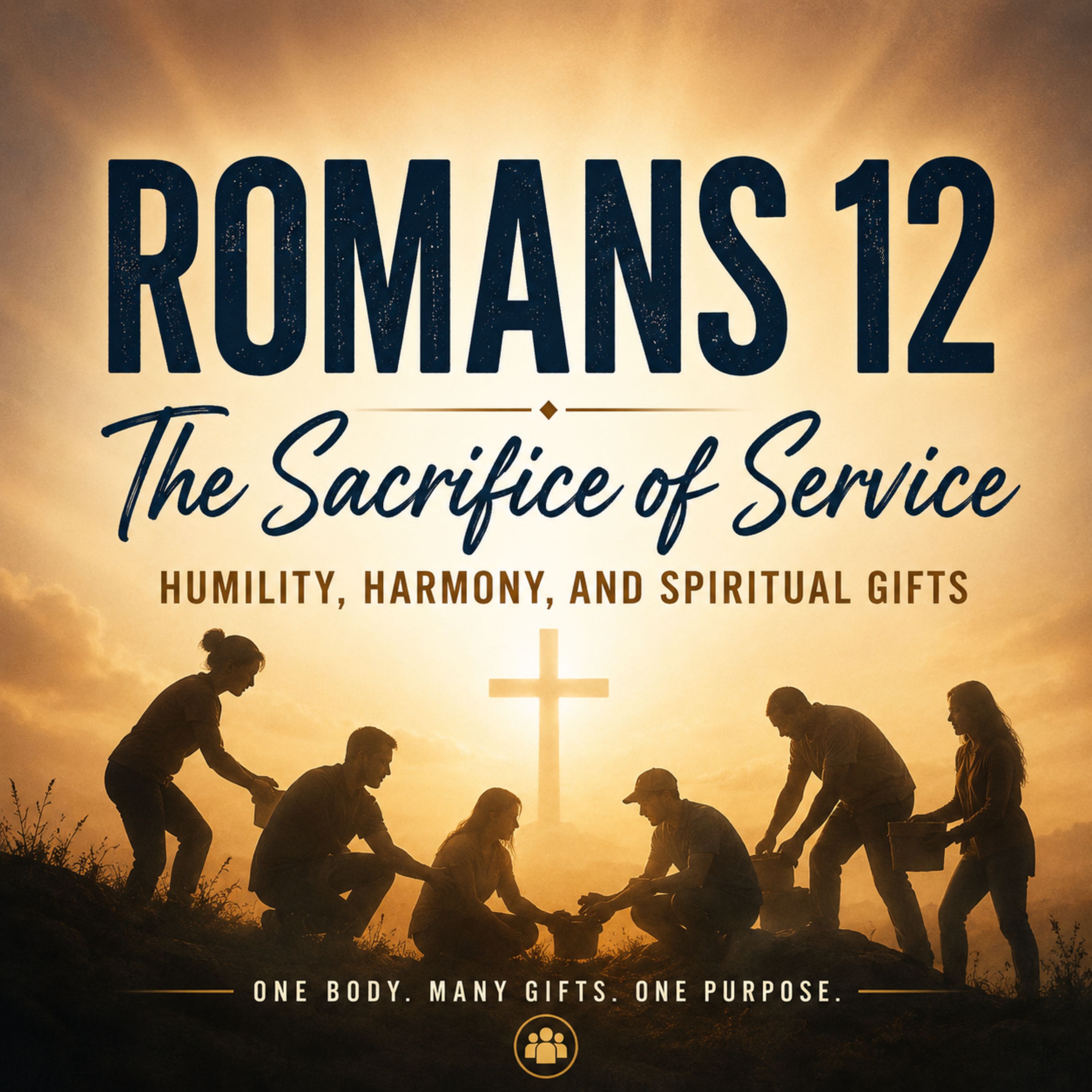


The salient point of this discourse is the emphasis on the transformative nature of the Gospel, as elucidated in Romans Chapter 12, which underscores the necessity of embodying the changes wrought by faith in our daily lives. Pastor Josh Massaro articulates that the Gospel is not solely a personal salvation experience but a catalyst that compels believers to exemplify love, humility, and service in their interactions with others. He expounds upon the criticality of recognizing one's spiritual gifts and the imperative of using them for the edification of the church and the glorification of God. The sermon further elaborates on the themes of humility and unity, positing that true service arises from a surrendered heart, reflecting the sacrificial nature of Christ’s own ministry. Ultimately, the message calls for a collective commitment to sacrificial service, urging believers to engage actively in their faith and contribute meaningfully to the body of Christ.
Takeaways:
- The Gospel, as revealed in Romans, is fundamentally the good news of Jesus Christ's sacrificial love for humanity, emphasizing His death and resurrection.
- In Romans chapter 12, the Apostle Paul transitions from the Gospel's implications for individual believers to its practical outworking in the Christian community.
- Christians are called to embody humility and service, recognizing that spiritual gifts are bestowed by grace, not by personal merit or achievement.
- The church functions as one unified body with diverse members, and each individual is gifted uniquely by God to fulfill specific roles in service to others.
- Sacrificial service, as demonstrated by Jesus, is the essence of the Christian life, where believers are called to prioritize the needs of others above their own.
- Understanding and utilizing one's spiritual gifts is essential for effective ministry, and believers are encouraged to actively seek opportunities for service within the church.
Thank you for joining our podcast. Visit our website at https://middletownbaptistchurch.org/
Subscribe to our YouTube at https://www.youtube.com/@middletownbaptistchurchde5091
Follow us on Facebook https://www.facebook.com/MBCDelaware
This podcast is produced by Ralph Estep, Jr., host of Financially Confident Christian, a daily podcast on Christian Finance you can find it at https://www.financiallyconfidentchristian.com
Going to be in Romans chapter 12.
Speaker AWe're going to continue our sermon series looking at the importance of theology, knowing God.
Speaker AAnd part of knowing God is understanding what he has done for us.
Speaker AAnd that's what we've been looking at, really, from Romans 1 all the way through Romans 11, we've seen the Gospel.
Speaker ATo us, the Gospel is the good news of Jesus Christ.
Speaker AThe Gospel is the news that Jesus came to this earth.
Speaker AHe died on the cross for our sins.
Speaker AHe.
Speaker AHe lived that perfect life.
Speaker AHe conquered death through the resurrection, now extends the gift of grace to us.
Speaker AThat is the good news that we see in the book of Romans and throughout all of Scripture, the Gospel to us.
Speaker ABut now In Romans chapter 12, we begin to see the gospel through us.
Speaker ABecause just as much as the gospel changes our heart by giving us new life, it gives us a new way to think.
Speaker AIt gives us a new way to live.
Speaker AIt gives us a new way to love.
Speaker AAnd we as Christians now must understand that the change that God makes to our heart now should be seen to the world.
Speaker AThe world should see the difference.
Speaker AThe world should understand that the goodness of God is something that we all must have.
Speaker AAnd not just that we want it, but we all need it.
Speaker AWhy?
Speaker ABecause the Bible says that all have fallen short of the glory of God.
Speaker AThere is none righteous.
Speaker ANo, not one.
Speaker ABut there is one who is righteous above us, and that is our Savior.
Speaker AAnd So Romans chapter 12 was all about walking in the way of God, walking in the will of God.
Speaker AAnd so we looked last week at verses one and two.
Speaker APaul said, I beseech you, therefore, brethren, now remember, therefore means what is this?
Speaker ATherefore, what is he talking about?
Speaker AWell, he's been talking about all the things that he's mentioned in Romans 1:11, the things that God has done for us.
Speaker ARomans 5:8.
Speaker ABut God commendeth or demonstrated his love toward us in that while we were yet sinners, Christ died for us.
Speaker AWhat an amazing message that is, that God loves us enough to send his only begotten Son for us.
Speaker AAnd so he says, because of the gospel, because of salvation.
Speaker AHe says, brethren, by the mercies of God, because by the way, all of those things that we've learned about so far have been because of the mercy of God.
Speaker AAnd we're in desperate need of the mercies of God.
Speaker AHe says the next step is this, that we present our bodies.
Speaker AYour bodies, a living sacrifice.
Speaker AAnd that's what we talked about last week, presenting ourselves a living sacrifice to the Lord.
Speaker ANot a sacrifice that dies, but a sacrifice that lives for the Lord.
Speaker AAnd he says, do that because why?
Speaker AHe says, that's holy.
Speaker AThat's.
Speaker AThat's separate, that's special.
Speaker AIt's acceptable unto God.
Speaker AHe says, which is your reasonable service.
Speaker AThe.
Speaker AThe Greek word there for reasonable is the word we get the word logical from.
Speaker AIt's only logical that we would give God everything in our lives because he has given us so much.
Speaker AHis abundant grace upon our lives leaves us with the sense of gratitude.
Speaker ASome call it the attitude of gratitude that we're called to live in our lives.
Speaker AAnd so if we are thankful, we just sing a song.
Speaker AJesus, thank you.
Speaker AAnd I would encourage you, as we sing any song within the church, to think about the words.
Speaker ADon't just sing the song, but think about the words and make it a testimony for your own life.
Speaker AAnd in that song, it says, jesus, thank you for all the things that you have done for us as believers.
Speaker AAnd so he says, here we present our bodies a living sacrifice, which is our reasonable or logical service.
Speaker AAnd so we get the verse 2.
Speaker AAnd then he says, okay, in that service, don't be conformed to this world.
Speaker ADon't be pushed into the mold that the world is trying to put you in.
Speaker AThe world is trying to tell you that it's normal, it's okay.
Speaker ALive the way that you want to live.
Speaker AAnd Paul says, reject that thinking.
Speaker ADon't be conformed.
Speaker ADon't buy into the lies.
Speaker AAnd then he says, but be ye transformed.
Speaker ABy way of review, that word transform means to change.
Speaker AWe get the word metamorphosis from that Greek word.
Speaker AAnd the idea would be that we're completely new, we're completely changed.
Speaker AAnd he says, be transformed.
Speaker AAnd how do you transform?
Speaker AWell, you don't transform yourself.
Speaker AYou don't go in and really try hard, read more books, or become more disciplined.
Speaker ANo.
Speaker AThe Bible says that we're transformed by the renewing of our mind.
Speaker AHow do we renew our mind?
Speaker AWell, we renew our mind by walking with God and allow God to cleanse our mind through the word of God, through prayer, through fellowship, through service.
Speaker AAnd he says that you may prove or demonstrate what is that good and acceptable and perfect will of God.
Speaker AIt is God's will for us that we live for him.
Speaker AIt's not enough just to say, well, I'm saved.
Speaker AI've got my ticket to heaven now.
Speaker AI'm just wanting to do my own thing.
Speaker AI just want to coast.
Speaker AI've got my security.
Speaker AAnd though being saved is a measure of security, that's not the end of the story.
Speaker ABy the way, the Scriptures tell us that salvation is just the beginning of the story.
Speaker AIt's now about living for Him.
Speaker AIt's now about reaching others for Him.
Speaker AAnd so now that's what he's going to talk about here in verse number three.
Speaker AHow do we do this?
Speaker AHow do we walk in sacrifice?
Speaker AHow do we serve Him?
Speaker AAnd so the sermon here this morning is called the Sacrifice of Service.
Speaker AThe Bible says that we're to give ourselves a sacrifice for the Lord, a living sacrifice.
Speaker ABut sometimes Christians are like, how do I do that?
Speaker ADoes that mean I just go to church?
Speaker ADoes that mean I read my Bible?
Speaker ADoes that mean that I just come every single day and walk around the building and think that that's a service?
Speaker AWell, the Bible clearly tells us what we're supposed to do, how we become servants of God, how we sacrifice ourselves for Him.
Speaker AAnd so here in this introduction, I want you to look at verse number three.
Speaker AHe says, for I say through the grace given unto me to every man that is among you not to think high of himself more highly than he ought to think.
Speaker ASo what does he tell us here?
Speaker AHe tells us that the first step of understanding how we are to serve him is by identifying our place in the relationship with God.
Speaker AHe tells us to have humility.
Speaker AAnd by the way, we got to go back and remember salvation.
Speaker ASalvation is through faith and faith alone.
Speaker AIt's the greatest gift that we could ever receive.
Speaker ASo if God just gave us salvation and ended it there, that would be enough.
Speaker AThat would be the greatest gift of grace.
Speaker ABut God doesn't just stop with saving us from hell.
Speaker AHe doesn't just stop when it comes to the idea of giving us everlasting life.
Speaker AWhat he does now is he gives us everlasting life.
Speaker AAnd.
Speaker AAnd then he gifts us.
Speaker AHe equips us with gifts of grace that we can serve him and be a part of his work.
Speaker AYou ever think about that?
Speaker AYou ever think about the blessing and the privilege it is to be part of kingdom work, to be part of the plan that God has for the redemption of this world?
Speaker AThough we're not the ones bringing redemption, we get to be a part of that.
Speaker AWe get to join in.
Speaker AWe get to be partners with God.
Speaker AAnd so he says here very clearly that salvation is enough, but he gives us more.
Speaker AGod's grace does not stop at salvation.
Speaker AHe graciously gives believers for service.
Speaker AAnd so he says, just as you can't boast about your salvation, remember Ephesians 2, 8:9.
Speaker AFor by grace are you saved through faith and that not of yourselves.
Speaker AIt is a gift of God, not of works.
Speaker ALest any man should boast, none of us should boast about our salvation.
Speaker ANone of us should look around at other people and go, well, look how much I did to save myself.
Speaker ALook how much God loves me because I'm so lovable.
Speaker ANo, the Bible actually tells us the other side of that.
Speaker AWe're not lovable, but God still loves us.
Speaker AWe didn't do anything.
Speaker AWe trusted in the work of Jesus Christ.
Speaker AAnd so just as much as we can't boast about the gift of salvation, we cannot boast about these spiritual gifts that are given to us for service.
Speaker ASometimes we're, maybe we're not tempted to boast in our salvation, but maybe we're tempted to boast in the areas that God has gifted us to serve him.
Speaker AAnd so he says here the first step of understanding the sacrifice of service is to realize that we are not the ones that have brought this gift to ourselves.
Speaker AHe says in verse three, don't think of himself more highly than he ought to think.
Speaker ANow it doesn't tell us to think lower than we are.
Speaker AIt tells us to have the proper viewpoint of who we are in the eyes of the Lord.
Speaker AAnd so the Christian life is not merely about sitting around and spectating, but, but it's now about sacrificial service.
Speaker AAnd so the spiritual gift are not earned abilities, but they're grace given opportunities to minister for the glory of God.
Speaker AAnd so for the next foreseeable future, what we're going to be doing in our study in Romans is going through these spiritual gifts, number one, understanding what they are, understanding what the individual gifts are within our spiritual walk and then understanding how we can live those out in our life properly.
Speaker AAnd so before Paul explains the gifts completely In Romans chapter 12, he addresses the heart behind the gifts.
Speaker AAnd that's what we're going to be talking about here this morning.
Speaker AAnd what I want you to think about is this God gifts people in a spiritual way.
Speaker AWe're going to talk about all of these gifts that God gives.
Speaker ABut with those spiritual gifts must come spiritual maturity.
Speaker ABecause people can be gifted but not be mature and not live out these spiritual gifts properly.
Speaker ASo God gives us gifts which we're going to talk about in this study.
Speaker AAnd then we're going to look at how we can grow in our spiritual maturity so that that can equate spiritual sacrifice.
Speaker ASo think about it this way, maybe some of you are math people.
Speaker AThink about it as an equation.
Speaker ASpiritual giftedness plus spiritual maturity equals spiritual sacrifice.
Speaker AThe spiritual sacrifice that God is looking for us to live out in our lives.
Speaker AAnd so that's a long Runway.
Speaker AWe're going to get right to the text, but let's go ahead and pray and we'll ask God to give us some clarity on the verses here this morning.
Speaker ALord, I pray that you be with us this morning as we look into your word.
Speaker ALord, I pray that we can see first and foremost the necessity of service in our life.
Speaker AThe, the goal for service, the heart of service, and ultimately the harmony of service.
Speaker AAnd so, Lord, I pray that we can walk in your truth here this morning.
Speaker AI pray that anyone here today that does not know you as personal savior, that today can be the day of starting that walk of believing and trusting in you so that we can understand what it means to walk in forgiveness and walk in salvation.
Speaker ASo Lord, I pray that you get me out of the way, remove any distractions from our minds and from our hearts, and may we clearly see you here this morning in Jesus name.
Speaker AAmen.
Speaker AVerse three says, for I say, through the grace given unto me to every man that is among you.
Speaker ASo the idea would be this, if you are a believer, you have a gift, at least one gift, maybe more.
Speaker ABut God has given every believer specific spiritual gifts to serve with within the church.
Speaker AAnd so he says, this is all Christians.
Speaker ANo one's exempt from this.
Speaker AIt's not like pastors are gifted or deacons are gifted, but the church member is not gifted.
Speaker ANo, the Bible says that all believers are gifted.
Speaker AAnd so he says, through the grace given unto me to every man that is among you, not to think of himself more highly than he ought to think.
Speaker AAnd so first of all, he says here, to understand service, it's the understanding of the humility of service.
Speaker APaul reminds every believer that ministry opportunities are acts of grace.
Speaker ATherefore, the spiritual gifts are no reason to boast.
Speaker AThere are no reason to have pride.
Speaker AThey're not self produced.
Speaker AAnd so everything that we have by way of gift is received by God.
Speaker ASo he says, don't think of yourself higher than you ought to think.
Speaker ABelievers are taught to have the appropriate view of themselves.
Speaker ASo it's not too high, not too low.
Speaker AWe'll see.
Speaker ASometimes people fall off the road on either side.
Speaker AOne side is, you know what, I'm so great.
Speaker ALife's all about me.
Speaker AI'm the center focus of church.
Speaker AI'm the center focus of the Christian life.
Speaker AIt's all about me.
Speaker AEveryone should serve me.
Speaker AWhat's it all about for me, right?
Speaker AYou see that theme going on in a lot of people's lives.
Speaker AAnd he says, don't think of yourself higher than you ought to think.
Speaker ABut then he also doesn't mention this.
Speaker ABut what we also understand is he says probably have the proper understanding, not too low, because there's sometimes people that will say this, well, I'm nothing, I, I have no hope.
Speaker AI, I have, I have no skills, I, I have no chance, I have no potential.
Speaker AAnd the Bible says no, it's to have the proper viewpoint of what God has gifted you in.
Speaker ASo, so it's not about allowing yourself to get too prideful, but, but it's not allowing yourself to get to a self defeatist attitude where you don't believe you can do anything because God has given us everything that we possibly need for the service that he's called us to do.
Speaker ASo what is humility?
Speaker AHumility is simply seeing ourselves truthfully before God, having a proper viewpoint of ourselves, not to exalt ourselves, but not to deflate ourselves, to see it for the way that God sees it.
Speaker AAnd as a believer, you have an identity in Christ.
Speaker AYou could call out to him.
Speaker AActs chapter 8 tells us that we can cry out to him, abba, Father, Daddy.
Speaker AWe have that personal relationship with him later on in Acts chapter or excuse me, Romans chapter 8, it tells us that nothing can separate us from the love of God, that we're more than conquerors as we are in Jesus Christ.
Speaker AAnd so the Bible tells us that we don't need to live a self defeatist attitude.
Speaker ABut at the same time we don't need to get to a place to understand ourselves to a degree that we are doing everything.
Speaker ASo service flourishes through humility and pride destroys ministry.
Speaker AI want you to see that when, when ministry is hindered is when pride seeps in a lot of times we can see it come in in very distinct ways.
Speaker AOftentimes it's not always addressed.
Speaker ASometimes it's something very small, something that might come in unawares at the very beginning.
Speaker ABut ultimately pride manifests itself in ways that are very destructive.
Speaker AWe even know the, the proverbs in the Old Testament that talk about the destruction, the devastation that comes along with pride.
Speaker ASo pride, if pride destroys ministry or anytime I say the word ministry this morning, think about it this way.
Speaker AService ministry just literally means service.
Speaker ASo serving the Lord, serving others.
Speaker ASo if pride destroys ministry, humility strengthens ministry.
Speaker AWant you to think about that here this morning.
Speaker APride destroys or limits my ministry, but humility strengthens ministry.
Speaker AWe see that over and over again.
Speaker AWith the life of Jesus.
Speaker AThink about all the ways in which Jesus demonstrated his humility before his disciples.
Speaker AIf anybody could have demonstrated pride, it was Jesus.
Speaker ABut yet he comes in a humbled stance.
Speaker AJohn 13 has the disciples come in and washes their feet.
Speaker AThat's the lowest act of a servant.
Speaker ABut yet Jesus was willing to do so, do so to show his servant humility.
Speaker ASo we, we see more.
Speaker AHumility strengthens ministry.
Speaker ABut then we also see ourselves when it comes to the truth of the word of God.
Speaker AIt brings us to a place to have a humble stance.
Speaker APride loses grip in our life when we see what the word of God has to say about our salvation.
Speaker AAnd so we see passage of Scripture throughout the New Testament that talk about this principle.
Speaker ABut one that you could maybe jot down and note is first Peter, chapter 5, verse 5.
Speaker APeter is writing to the church, and particularly leaders in the church.
Speaker AAnd he talks about them having the proper stance and having the proper way of leading and shepherding.
Speaker AAnd then he ends verse five with a statement.
Speaker AHe says, and be clothed with humility, for God resisteth the proud and giveth grace to the humble.
Speaker ASays in verse 6, humble yourselves therefore under the mighty hand of God, that he may exalt you in due time.
Speaker AThe same principle is given to us here in Romans, chapter 12.
Speaker APaul says, don't think more highly of yourself than you ought to think.
Speaker ABut then he says a phrase here.
Speaker AHe says, but think soberly.
Speaker AThat word sober or soberly means to have the proper focus on the proper things, to be serious about the right things, to to have self control, to have discernment, to know.
Speaker AThis is something that I need to be serious about.
Speaker AThis is something that I need to spend time on.
Speaker ASo he says, don't think of yourself higher than you ought to think, but have the right thinking.
Speaker AThink properly about yourself.
Speaker AThink properly about your service.
Speaker AThink properly about all the things that you're doing for the Lord.
Speaker AAnd he says, according as God hath dealt to every man the measure of faith, meaning God is giving us the opportunity to know him in a personal way through service, through sacrifice, through study.
Speaker AAnd so he says, understand that and grow in your faith.
Speaker AYou're only going to be able to serve at the capacity of your faith.
Speaker ALike if I don't truly believe in something, I'm not going to serve it, I'm not going to sacrifice for it.
Speaker AI'm not going to buy into it, so to speak.
Speaker ASo he says, if you want to understand God's gifts working through you, grow in your faith.
Speaker AAnd grow in your understanding of him and how he works in your life.
Speaker AAnd so he says the starting place for that is renewing your mind, thinking soberly, thinking properly.
Speaker AAnd so the, the first step of this sacrificial service is having humility.
Speaker AAnd humility comes from seeing ourselves from where we are and seeing where God is and seeing the distinction between that this morning we say, behold our God and, and.
Speaker AAnd think about all of those things that are said in that song.
Speaker AAll the things that we can attribute to God we cannot attribute to ourselves.
Speaker AThere are things about God that we can never obtain.
Speaker AWe're not all knowing, we're not all powerful, we're not all present.
Speaker ABut the One who has given us salvation is, and the One who is equipping us is.
Speaker AAnd so therefore we come to a place of humility when we understand how big God is and how limited we are.
Speaker AAnd we come to him saying, lord, he, it's you that are working through me.
Speaker ANot.
Speaker AIt's, it's not.
Speaker AIt's not me working for you, it's you working through me for you.
Speaker AAnd so we get to this place where we see him say in verse four, for as we have many members in one body.
Speaker AWhat is he talking about here?
Speaker AYou might read verse four and say, what.
Speaker AWhat is he.
Speaker AWhat is he saying here?
Speaker AHe says this.
Speaker AHe.
Speaker AHe's likening the church to the physical body.
Speaker ASome of you are familiar with First Corinthians, chapter 12.
Speaker AHe uses the same analogy.
Speaker AHe says the.
Speaker AThe church is the body of Christ.
Speaker AAnd just as the body has different parts or different members, so does the church.
Speaker AThe hand doesn't do the job of the foot.
Speaker ANow, some of you might have a lot of talent and be able to grab things with your feet.
Speaker AI don't know.
Speaker ABut the truth is, is that most of us, our hands are not designed the same way as our feet.
Speaker AThey both serve a purpose.
Speaker AOur eye is not our ear.
Speaker AFirst Corinthians, chapter 12 says that.
Speaker AHe says, if the whole body was the eye, how could it hear?
Speaker AIf the whole body was the ear, how could it see?
Speaker AAnd so the idea here that Paul is mentioning is that there is one body.
Speaker AThe church is unified, but it's not uniform.
Speaker AAnd so he says here in verse four, for as we have many members or many parts in one body, and all members have not the same office or the same job.
Speaker AYou know, God is a God of clarity.
Speaker AHe is not a God of confusion.
Speaker ASo let's say today all of you said, you know what I believe that God has given me the gift of preaching right now.
Speaker AAnd all of you got up here on this stage and started preaching.
Speaker AWhen I'm preaching, and we're all preaching different things, that would not be a time of clarity.
Speaker AThat would be a time of confusion.
Speaker ABut there are instances in the church in which we see people serving all at once, but not all in the same capacity.
Speaker AAnd so what does he say here?
Speaker AHe says we are all part of one body, and all the members don't have the same job.
Speaker AAnd that's a good thing.
Speaker AAnd so the church is unified, or at least it should be unified.
Speaker AThe way that God has ordained it to be is that we would be working as a church, as one body moving together for the same.
Speaker ASame purpose, not for our own individual purpose.
Speaker ABecause if one part of the body is off, though, we might know or we might not know, it definitely affects the whole body.
Speaker ASome of you may have had in your life an instance where you had a sickness, or for me, I always use this as an analogy.
Speaker AI had a kidney stone one time, and that little tiny thing, even though I didn't see it, it was affecting my whole body.
Speaker AMy.
Speaker AMy hand wasn't hurting, but let's say it was hurting because everything was hurting.
Speaker AAnd sometimes within the church, we don't necessarily know what's going on, but if one part of the body is hurting or deficient, it affects the whole body.
Speaker AAnd that's what Paul is talking about here.
Speaker AHe says, don't think that all of us have the same job.
Speaker AAll of us are unified, but we have differences.
Speaker AAnd so what we would say is this.
Speaker AThe church is unified, and we are unified upon what?
Speaker ANot upon our similar interest.
Speaker ABecause if that was the case, some of us might not be unified here.
Speaker AHow many?
Speaker AI won't ask this, but I was going to say, how many of you like to watch sports and which teams you like?
Speaker AAnd we can see how divided we really are.
Speaker AThank the Lord that we're not all here, because we're one fan of one team, okay?
Speaker ABut the idea would be this.
Speaker AIt's not about just, hey, we have similar interests.
Speaker AWe like the same sport, or we like the same food, or we like whatever.
Speaker AThe Bible tells us that there really is one common bond that we all have, and that is our common ground in Jesus Christ, our common hope in Jesus Christ.
Speaker ASo we are one body in him.
Speaker ASo think about it from this perspective.
Speaker AIf you and I come together and we have some differences, we could either resolve those differences by fighting about those differences or understand that, that we have a common bond, or at least we should have a common bond in our relationship with Jesus Christ and try to build off of that.
Speaker AAnd so that's what he's talking about here.
Speaker AHe says, we're all one body, but all members are distinctly different.
Speaker ASo I've said this before, but unity does not mean uniformity.
Speaker AThink about the difference between those two words, unity and uniformity.
Speaker AUnity is we're working together as one.
Speaker AUniformity is we all look the same and we all do the same things.
Speaker AThat wouldn't be effective.
Speaker AThat.
Speaker AThat wouldn't be what God has called us to do.
Speaker ASo we are called to be unified, but we're not called to be uniform.
Speaker AWe're actually called to be different.
Speaker AWe're called to be distinct.
Speaker AI want you to see that in another passage, if you go to First Peter, chapter four.
Speaker AWe just looked at it here this morning in our scripture reading.
Speaker AYou see the very same principle given to us by the Apostle Peter.
Speaker AAnd he says in verse number 20, verse number 10 of First Peter, chapter 4, the idea that, yes, we are all gifted, as every man hath received the gift.
Speaker AAnd then he says, even so, minister the same one to another as good stewards of the.
Speaker AIn the King James, it says manifold.
Speaker ABut this could also mean various or different grace of God.
Speaker AMeaning you and I might be different, differently gifted in our service to the Lord, but at the same time, we're to minister one to another.
Speaker AHe goes on to say in verse number 11, if any man speaks.
Speaker ASo there's these gifts of speaking.
Speaker AThere's these public gifts.
Speaker ASpeak of the oracles of God.
Speaker AIf any man minister that's talking about service, maybe behind the scenes, let him do it.
Speaker AOf the ability that God giveth.
Speaker ABut ultimately we see who is glorified, not the servants, not the preacher.
Speaker AHe says that in all things, God may be glorified through Jesus Christ.
Speaker AAnd so the idea for this would be that we're working together.
Speaker AWe.
Speaker AWe're different, but at the end of the day, all of us are uniquely gifted so that we can serve the Lord.
Speaker ASo every believer is uniquely gifted by God.
Speaker AAnd there's distinct roles that do not diminish equal value.
Speaker AIn First Corinthians, chapter 12, it actually tells us that every part of the body is needed.
Speaker AHe actually talks about, in some cases, the ones that are not as attractive are necessities there.
Speaker AThere are certain service opportunities within the church that might not get as much praise as others.
Speaker ADoes that mean we just forget about them?
Speaker ADoes that mean that we neglect them.
Speaker ANo, we actually say that those are needed.
Speaker AAnd so he says, as God gives us, we are all to work, not thinking about the praise of man, or the payments or the position, but to do it in such a way that we think about the ultimate goal of glorifying God.
Speaker AAnd so in verse number three, he reminds us that it's to be done in humility.
Speaker AAnd verse number four, he reminds us that it's to be done in harmony.
Speaker AService within the church.
Speaker AService for the Lord should be done with a humbled spirit, and it should be done in harmony.
Speaker AUnified together for the cause of the gospel.
Speaker AThe church is one body.
Speaker AThe church should not be fighting against itself.
Speaker AThink about how weird it would be if someone walked into the building today and they were punching themselves, kicking themselves, tripping all over themselves.
Speaker ARight away, we like, something is wrong.
Speaker AWe need to identify that it might be a mental problem.
Speaker AIt might be something going on.
Speaker AMaybe they're seeing things we don't know.
Speaker ABut we know that a person is not healthy if they're fighting against themselves.
Speaker AAnd we even see that in other ways.
Speaker AWhen.
Speaker AWhen the body maybe has a disease, it fights against itself and it isn't properly aligned.
Speaker AAnd we know that needs to get fixed.
Speaker AThat's the same thing within the church.
Speaker AAnd we've seen this before.
Speaker AYou've seen it maybe in another church.
Speaker AThere is going to be times when we have difficulties in our service that we might fight against ourselves.
Speaker AWell, you know what?
Speaker AWhen the body fights against itself, it's never going to be effective for the cause of the gospel.
Speaker AIt's never going to be effective for the ultimate purpose of pushing forward the kingdom of God.
Speaker AJesus in John 17 has this prayer.
Speaker AIt's his high priestly prayer.
Speaker AOne of the things that he asked the Lord is, Lord, that they would be unified, that the church would be unified like you and I are unified.
Speaker AIt is the heart of God that we walk in humility and we walk in harmony.
Speaker AThe church has to work together.
Speaker AWe make a huge mistake when we neglect unity without individuality.
Speaker ABut then we also make a huge mistake if we neglect individuality without unity.
Speaker AMeaning this.
Speaker ASometimes we want to celebrate the individuality of the person within the church.
Speaker ABut then we forget about the need that we need to come together and unify.
Speaker AThere's other times where we celebrate unity so much and uniformity so much that we forget that there are people that are going to be distinctly different.
Speaker AAnd it's okay that they're different.
Speaker AIt's okay that someone serves a different way.
Speaker AIt's okay that someone teaches a different way.
Speaker AI mean, one of the things that I love about our classes at our church, our Sunday school classes and our small groups is that there's a style for you.
Speaker AOkay?
Speaker AThere's video series, there's lecture series, there's discussion classes, there's book studies.
Speaker ALook, there's not one particular way to teach a class.
Speaker AThere's a lot of ways to get to the truth.
Speaker AAnd what we have to understand that as Christians, not everyone has to do it the exact same way as me.
Speaker ANow, what I will say is this.
Speaker ASometimes people might misunderstand that and say, are you saying that we can all just worship the way that we worship and we can all just do what we want to do?
Speaker ANo.
Speaker AAre a particular set of things that God has laid out for us that we must follow.
Speaker AThere, there's.
Speaker AThere's framework there, there's guard rails.
Speaker AThat's scripture.
Speaker ABut where scripture doesn't speak, that's where we have the ability to have levels of freedom, to have levels, levels of liberty, which we're going to talk about in Romans chapter 14.
Speaker ASo.
Speaker ASo when we get back to this idea of service, we see that God has designed the church to function together for his glory.
Speaker ASo verse five, Romans, chapter 12, verse five.
Speaker ASo we, being many, are one body in Christ, in Christ, and everyone members one of another.
Speaker ASo the reality of service within the church looks like this.
Speaker AOur gifts are to minister to others, not magnify ourselves.
Speaker ASome are called to plant, some are called to teach, some are called to encourage.
Speaker ASome are called the lead.
Speaker ASome are called to be quietly behind the scenes serving in that capacity.
Speaker ABut every gift matters to the body.
Speaker AAnd so when we get into the study, I want you to understand we are going to talk about specific gifts.
Speaker AAnd I believe that the word of God clearly teaches that every Christian is gifted at least one of these ministering gifts.
Speaker AHere In Romans chapter 12, the truth is, is that there's a lot of Christians that are Christians that are in churches, that are maybe even serving in churches.
Speaker AAnd if we were to ask them, what's your spiritual gift or gifts?
Speaker AThey would say, I had no idea.
Speaker ANever been taught that.
Speaker AI didn't know that we had individual gifts.
Speaker AThe Bible very clearly teaches us that there are those things.
Speaker AAnd so what we need to do as a church is we need to dig in and understand that God, if I'm a believer in Jesus Christ, he has gifted me for a specific purpose in a specific way so that I can serve at that capacity in a way that's effective for the cause of the gospel.
Speaker ANow, I will say this.
Speaker ASome of these gifts that we're going to talk about are going to be natural for you.
Speaker AYou're going to understand that, you're going to see that.
Speaker ABut there's going to be other gifts that you're not as inclined to follow in your life.
Speaker ASo, for example, there's one gift called the gift of mercy.
Speaker AAnd let's say one of us here this morning says, you know what?
Speaker AI'm not gifted in the gift of mercy.
Speaker ASo I just, you know what?
Speaker ADon't need to do it because that's not my gift.
Speaker AWell, that's not true because we're all called to have mercy.
Speaker ASo we're all called to work at some capacity within these gifts.
Speaker ABut other gifts are going to be more supernaturally gifted to us so that it happens where others are going to be something that we have to strive for and grow in and ask God to give us strengthening and teaching in.
Speaker AAnd so we're going to go through that, through this study.
Speaker AAnd so what I want you to do as we go through the study is honestly, authentically go through this study in Romans chapter 12 and identify how God has gifted you so that you could say, yes, I am gifted in this area.
Speaker AAnd as I'm gifted in this area, how could I use that within the body of Christ?
Speaker ABecause that's really the purpose.
Speaker AIf I was to disciple you, if I'm discipling you, I don't just need to give you information, even though I love to do that.
Speaker AI love to teach.
Speaker AI love to give facts.
Speaker AI love to give all the things that Scripture tells us about the Word of God.
Speaker AThose are good things.
Speaker AWe all should be teaching or learning from the Word of God.
Speaker ABut at the end of the day, discipleship doesn't just stop with facts.
Speaker AIt goes further.
Speaker ARight?
Speaker AIt goes further.
Speaker AAnd one of the aspects of discipleship that must happen within the church is that we need to help others find the way that God has gifted them so that they can use that for the cause of the kingdom.
Speaker APaul does that with Timothy.
Speaker APaul says, don't neglect the gift that was given to you.
Speaker ADon't forget about it.
Speaker ADon't.
Speaker ADon't put it aside.
Speaker AAnd so for us, if we are going to be a church that embraces the discipleship direction, it's this that we identify.
Speaker ANumber one, where God has gifted us in these spiritual gifts and how I can lead other people, number one to salvation, but then number two to service and sanctification.
Speaker ASo the way it would practically look is that I could sit down with a brother or sister in Christ and say, amen, you've trusted in the Lord.
Speaker ANow it's time for you to turn everything over to Him.
Speaker ANow we're going to identify how God has blessed you and how he has gifted you.
Speaker AAnd you can see, okay, yes, they're gifted in teaching.
Speaker ANow, where do we take that?
Speaker AWhere, where do we go with that?
Speaker AAnd it's plugging people into the areas that are needed within the church.
Speaker AAnd so I, I want us to see this not just as a, A, a lesson about preaching, about theology, even though theology is so important.
Speaker ABut, but part of theology is practical theology.
Speaker APractical theology is applying what we know about God.
Speaker AAnd if you know about God, certain things, it's applying that to our lives.
Speaker AAnd so we're going to get to verse number six, and we're going to see gifts like prophecy.
Speaker AWe're going to dive deeper into that, the proclamation of the Word of God.
Speaker AWe're going to talk about gifts of ministry.
Speaker AThat's service.
Speaker AWe're going to talk about gifts of teaching.
Speaker AWe're going to talk about gifts of exhortation.
Speaker AThat's challenging.
Speaker AThat's, that's encouraging.
Speaker AThere, there's, there's the gift of giving.
Speaker AThere's the gift of administration or ruling.
Speaker AThere's the gift of mercy.
Speaker AAnd some of you might say, let's get into those right now.
Speaker AWell, for time's sake, we're not going to dive into each one of those, because what we're going to do is we're going to do a deep dive into each one of these gifts.
Speaker AAnd we're going to talk about how God has equipped certain people in certain ways.
Speaker AAnd we're going to look at examples of people in scripture that have lived out these things in their life so that we can see examples in our life.
Speaker ABut one of the things that I would really challenge you with is that before we even get started with understanding these gifts and applying these gifts to our life is that we have to come with the right perspective.
Speaker AWe have to come with the right purpose.
Speaker AAnd the purpose is always to encourage others and glorify God.
Speaker ASo we have the humility of service.
Speaker AWe have the heart of service.
Speaker AAnd that's really what I want us to close with here this morning.
Speaker AMark, chapter 10, verse 45.
Speaker AGo, go with me to Mark, chapter 10, verse 45.
Speaker AJesus, again, is the greatest example that we could ever have in anything that we do in our lives.
Speaker AAnd we think about what Jesus tells his disciples here in Mark chapter 10.
Speaker AAnd I think that this could be summarized as the heart of our service to the lord.
Speaker AMark chapter 10, verse 45.
Speaker AJesus says, for even the Son of Man, talking about himself, came not to be ministered unto, but to minister and give his life a ransom.
Speaker AFor many, Jesus models sacrificial service.
Speaker AThink about two words here.
Speaker AService, sacrifice.
Speaker AWe see it right there in that verse, verse 45.
Speaker AThe son of man came not to be ministered unto.
Speaker ASo Jesus focus wasn't who's going to serve me at least in his earthly ministry.
Speaker ANow let me make this clear.
Speaker AOne day every knee will bow, every tongue will confess that Jesus Christ is Lord.
Speaker AWe will worship him.
Speaker AWe should serve him.
Speaker ABut Jesus's earthly ministry was not designed so that he could just come and everyone would serve serve him as he was sitting on the throne.
Speaker AHe says, no, my purpose was this, to minister that service, to serve and to give his life a ransom.
Speaker AFor many, that's sacrifice.
Speaker ASo Jesus models the sacrificial service example for us.
Speaker AJesus didn't come demanding position.
Speaker AJesus came giving himself to others.
Speaker AAnd we know the ultimate example of that type of sacrifice is, is Calvary is the cross.
Speaker AJesus basically says this, I love you so much that I will give myself for you.
Speaker AAnd in any of these ministering gifts that we're going to talk about In Romans chapter 12, it all starts with that type of heart.
Speaker AI'm willing to put others needs before myself.
Speaker AI'm not going to preach or teach or give or serve or administrate without the proper response.
Speaker AAnd that is the response of hey, I'm doing this for you because of him, not I'm doing this for you because of me.
Speaker ABecause a lot of times we enact the spiritual gifts within our church in the flesh.
Speaker AWhat does that mean?
Speaker AThat means I want to administrate properly so that no one causes me any issues.
Speaker AI'm tired of all these headaches within the church.
Speaker ASo I got to administrate this way so that I don't have any more problems in my life.
Speaker AOr I need to preach the word of God so that people will notice me.
Speaker AOr I need to serve so that people will serve me.
Speaker AOr I need to give so that there can be strings attached.
Speaker ANo, those are all living out our spiritual gifts in a fleshly way.
Speaker AAnd by the way, we can exercise these spiritual gifts either in the heart of service in the spirit or a heart of selfishness in our flesh.
Speaker AThat's the danger.
Speaker AIt's like in anything in our Christian faith, we can exercise in our flesh or we can exercise in the spirit.
Speaker ASo it's not just about identifying our gift, it's not just about serving in the church, but it's doing it with the right heart.
Speaker AAnd that's what we see here in this passage.
Speaker AHe says, do it with humility, do it with harmony, and do it with a heart of service and sacrifice.
Speaker ASo the three points are very simple here this morning.
Speaker ANumber one, we are to serve the Lord in our spiritual gifts with humility.
Speaker ASecondly, we're to do it with harmony.
Speaker AThirdly, we're to do it with a heart of service and sacrifice.
Speaker AFaithful service honors our master.
Speaker AThere's the classic parable of the talents in Matthew, chapter 25.
Speaker AIf you want to jot that down for your notes.
Speaker AMatthew 25, 14:30 Tell us this amazing parable of how God gave a certain denomination of money to three individuals, and two of them used it and were good stewards of it.
Speaker AAnd by the way, a steward means that you don't own it, but you're managing it.
Speaker AAnd so God gave two different people money, and they used it, they grew it.
Speaker AAnd God said, well done, thou good and faithful servant.
Speaker ABut then there was one, if you remember, he didn't do anything with it.
Speaker AHe buried in the ground.
Speaker AAnd because of his fear and because of his fear of failure, he didn't do anything with it and he wasted it.
Speaker AAnd of course, God wasn't happy with that.
Speaker AThe question for all of us this morning is that those things that God has given us in our life, are we going to bury it and just sit on it?
Speaker AGod's never pleased with that.
Speaker AGod wants us to be stewards of it.
Speaker AHe wants us to multiply it.
Speaker AAre we going to serve it for our own praise, our own power, our own purpose, and selfishly use those gifts?
Speaker AOr are we going to say, lord, whatever you have given me, I want to give back?
Speaker AI want to understand how you've blessed me, how you've gifted me, and I want to push forward in that.
Speaker ANow, I do need to note a few things here.
Speaker AOne, a lot of times I use this analogy in my Sunday school class this morning, I was talking to a dear lady a while ago, a long time ago, and I was asking her about her spiritual gifts.
Speaker AAnd she said, and don't take offense to this anyone, but.
Speaker ABut we're going to get there.
Speaker ASo my spiritual gift is cooking, Pastor.
Speaker AI'm a cook, and that's my spiritual gift.
Speaker AAnd I wanted to be nice, and I said The Bible never talks about us.
Speaker AThe a spiritual gift is cooking.
Speaker AThat's a natural talent that God has gifted you with, and that's different.
Speaker AWe need to distinguish between natural talents and spiritual gifts.
Speaker ANow, can somebody use the natural talent of cooking and their spiritual gift?
Speaker AOf course.
Speaker AYou know what I'm really encouraged when someone cooks me something and gives it to me.
Speaker AThat's that.
Speaker AThat would be.
Speaker AThat would be a gift of exhortation.
Speaker ARight?
Speaker AYou would, you would encourage me with that.
Speaker ABut.
Speaker ABut what we need to distinguish between the two is that there are certain things that God has naturally gifted people in saved and unsaved.
Speaker ALike, can an atheist cook?
Speaker AYeah, I'm sure that I've had a cook at a restaurant that's an atheist that cooked me a really good meal.
Speaker AThere are people that don't believe in God that can sing really well, that can build things with their hands.
Speaker ASo we take all the things that God has gifted us naturally, and then we think about how we can use those natural talents in the realm of the spiritual gifts.
Speaker AAnd that's what we're going to work on through this series as well, is okay, yes, God's given me the gift of singing.
Speaker AHe's given me the gift of cooking.
Speaker AHe's given me the gift of building.
Speaker AHe's given me the gift of whatever.
Speaker AAnd how can I use that now as it's as a redeemed person and having the Spirit guiding me, how can I use that in the realm of encouraging people for the cause of the gospel?
Speaker AThat's the exciting thing.
Speaker ABecause God brings people from all different backgrounds and all different skill sets.
Speaker AAnd he can say, you know what?
Speaker AHe can use you, who maybe can work behind the scenes with your hands.
Speaker AAnd maybe God can use others in capacities of teaching and capacities of giving.
Speaker ABut the true question would be this.
Speaker AIf the first step of have you taken that step and say, lord, whatever you want from me, I'm willing to give that to you?
Speaker AGod expects faithfulness because he has entrusted us with so much.
Speaker AWe're not responsible for someone else's gift because this is what sometimes happens.
Speaker AI look at somebody and I look at their gift and I go, wow, I wish I had that gift.
Speaker AThat gift's way more important.
Speaker AThat gift's way more valuable.
Speaker ANo, we're not to look at other people's gift and covet their gift.
Speaker AWe're not to look at my.
Speaker AOur own gift and say, you know, I'm better than that person because I'm gifted this way.
Speaker ANo, we're responsible for what God has given us.
Speaker AAnd we're responsible for the stewardship thereof.
Speaker AAnd that's a word that we're going to be using a lot in this study.
Speaker AStewardship.
Speaker AStewardship is God has given me something that it's not something that I earned.
Speaker AAnd now I get to manage that and use that and multiply that.
Speaker AFor him, he's the owner, I'm just the manager.
Speaker AAnd so service is sacrifice, Service is worship.
Speaker AService is everything.
Speaker AAnd we're thinking about it from the perspective of a believer, but as an unsaved person, an unsaved person can try to do as much as they can, but there's always going to be that cutoff.
Speaker AThere's always going to be that limit.
Speaker AWhy?
Speaker ABecause true biblical service starts with the Spirit.
Speaker AAnd if you're an unsaved person, you don't have the Spirit living within you.
Speaker ASo.
Speaker ASo serving God is not merely an activity, it's sacrifice.
Speaker AWe talked about this at the men's meeting last night.
Speaker AService is not just an activity.
Speaker AMinistry is light.
Speaker AIf we are Christians, we don't just look at our ministry as this is a Sunday morning thing or a Wednesday night thing.
Speaker AWe look at our life as a sacrifice.
Speaker AAnd we look at every element of our life to be a ministry opportunity.
Speaker AAnd so Romans chapter 12 begins with presenting our bodies as a living sacrifice.
Speaker AAnd it begins to grow in teaching us how we can do that practically within the church.
Speaker ASo sacrificial service is the response to saving grace.
Speaker AAnd so I have a few questions for you here this morning.
Speaker ANumber one, are you saved?
Speaker ADo you know what that even means?
Speaker AThe Bible says that all of us are lost in our sin.
Speaker AWe are all dead in our sins.
Speaker AAnd so to start this process of spiritual growth, to start this process of spiritual service, you must start with faith.
Speaker AAnd so the Bible says, first and foremost, have you trusted in Him?
Speaker AHave you put your faith in Him?
Speaker AHave you said that he is the only one who can save me and not myself?
Speaker AHave I recognized the sin in my life?
Speaker AHave I repented of my sin?
Speaker ABasically turning away from my good works and turning to his work and trusting in him?
Speaker AIs that something that you have done in your life?
Speaker AIf so, great.
Speaker AIf not, get that taken care of today.
Speaker ABut secondly, if you have received the grace of God in salvation, are you willingly and openly ready to be used by God in your spiritual gifting?
Speaker AAre you ready to be used by God?
Speaker AAre you willing to be used by God?
Speaker AIf not, prepare yourself.
Speaker AGet ready.
Speaker ADive deep.
Speaker AUnderstand.
Speaker AIdentify what God has blessed you with.
Speaker AWithin your service gifts and use those for the kingdom.
Speaker AAnd so if you do know your gift, are you serving, are you using the gifts that God has given you for his kingdom and, and not our own?
Speaker AAnd so the closing challenge here this morning is this.
Speaker ADo you know him in a personal way?
Speaker AHave you trusted in him as Savior?
Speaker ANumber two?
Speaker AHave you identified your spiritual gift?
Speaker ANumber three, if you have identified your spiritual gift, are you using that gift within the church, within the community, within the world?
Speaker ASo may we have the same heart as our Lord, Humbled in spirit, unified in purpose and sacrificial.
Speaker AGod has not given us the gifts to sit on the sidelines.
Speaker AI think that many of us understand this principle.
Speaker AWe have some sports teams here at our church that we have, and it's great.
Speaker AIt's an awesome ministry.
Speaker AAnd if someone came out here, let's say, let's say I'm not a Phillies fan, but let's say for whatever reason, Bryce Harper started coming to our church, say, okay, great, you know, I would be fine with that.
Speaker AIt's like, Bryce Harper, you need Jesus Christ.
Speaker ASome of you are like, who is Bryce Harper?
Speaker AHe's a good, well known baseball player, okay?
Speaker AAnd he started coming to our church, right?
Speaker AAnd he sat down here in the pew and we're like, oh, amen.
Speaker AYou know, that's great.
Speaker ALet's.
Speaker AHe gets saved.
Speaker AAnd I don't know what his spiritual condition is, but let's say this case, he gets saved within our church and he's here and we tell him, hey, there's a church softball team.
Speaker AIf you get any free time in your week, you know, we'd love for you to come out, like.
Speaker AAnd he would be like, no, I'll just come out and watch.
Speaker AWe would say, like, what, What a waste.
Speaker AWhat a waste.
Speaker AWe got an MLB player here, we can't use them.
Speaker AAnd, and we laugh.
Speaker AAnd that's.
Speaker AIt's.
Speaker AWe get that.
Speaker ABut think about, like, every single one of you that come to this church and trust in Jesus Christ as your savior, have that holy spirit living within you.
Speaker AThe same spirit that rose Jesus from the dead, the same spirit that led David on the battlefield against Goliath, the same spirit that brought fire down from heaven through Elijah, the same spirit that was able to give peace to Stephen as he was being stoned as a martyr, the same grace that was there for Paul to preach the gospel to the lost and dying world is the same spirit that lives within us.
Speaker AAnd so when we sit in the pew and we don't utilize the Spirit of God in our life.
Speaker AAnd it's just as crazy as a professional baseball player sitting here and not getting on the field.
Speaker AIt's like, why are we sitting on the sidelines?
Speaker ALet's get in.
Speaker ALet's get involved.
Speaker AAnd some of you say, pastor, I've been involved, but it's been a long time and I've lost my skill set.
Speaker AOkay, well, you know what happens?
Speaker ALet's say we don't have Bryce Harper come out, but who's an old Phillies player.
Speaker AThat's way beyond their years.
Speaker AOkay, someone tell me, was that Mike Schmidt?
Speaker AOkay, Mike Schmidt comes here.
Speaker AMike Schmidt's like, pastor Josh, you don't want me on the softball field.
Speaker AYou might have to have liability.
Speaker AI might blow something out.
Speaker ABut you know what?
Speaker AIf I had Mike Schmidt out here, I said, you better start teaching those guys.
Speaker AGet them out there.
Speaker AGet those young guys out there on the ball field and start teaching them.
Speaker AIt's the same thing with us.
Speaker ASome of us might not have the same skill set as we used to physically, but now we're able to pass that torch on to the next generation.
Speaker AI'm not able to get out and knock on those doors.
Speaker AI'm not able to get out and build those things.
Speaker ABut I can walk a young Christian through that same process of what I went through in growth.
Speaker AAnd so do you see that?
Speaker ASometimes the role changes, but the same purpose is there.
Speaker AIt's to lift up the cause of the gospel.
Speaker AIt's to encourage other people to come to know Jesus and to teach them how to walk in that path that Jesus has called us to walk in.
Speaker AAnd so, though this is just an introductory sermon, God has not called us to sit on the sidelines.
Speaker AHe's called us, and he's equipped us to serve within the church and to reach our community and to glorify Christ in this world.
Speaker AAnd so today, have you trusted in Jesus?
Speaker AIf you have, praise God.
Speaker AThe Bible tells us, theologically speaking, that the Holy Spirit now lives within us.
Speaker AThe next question is, how am I living that out in my life?
Speaker AHow am I serving?
Speaker AHow am I sacrificing?
Speaker AIs it with humility?
Speaker AIs it with harmony?
Speaker AIs it with a heart of service and sacrifice?
Speaker AThis morning, you have an opportunity to respond.
Speaker AI hope that you come back in the future, because we're going to dive deeper into some of these elements of the gift of service.
Speaker AAnd so let's go ahead now and have a time of invitation, time of response.
Speaker AIf you're able to stand with me, every head bowed, every Eye closed as the music plays here.
Speaker AI don't want anyone looking around.
Speaker AI don't want any distractions.
Speaker ABut what I do want is a time for you to respond to the word of God here.
Speaker AThis morning, the first and biggest question that we always ask is this.
Speaker ADo you know Jesus as your personal Savior?
Speaker AHave you trusted in him and him alone to save you from your sins?
Speaker AIf that be the case, praise God, we have a reason to rejoice.
Speaker AWe have a reason to celebrate this morning.
Speaker ABut secondly, if you've trusted in Jesus as your Savior, have you taken that next step of saying what I want to serve him at the best I can in the most effective and efficient way for the cause of the kingdom.
Speaker AIf so, praise God.
Speaker AKeep up the good work, keep the faith, keep serving, keep sacrificing.
Speaker ABut if not, it's never too late to get started.
Speaker AIt's never too late to put to practice what God has blessed you with in such a great way.
Speaker AIf you are serving, are you serving with humility?
Speaker AAre you serving with harmony?
Speaker AOr if you serving with the heart of sacrifice and service?
Speaker AIf not, get that right with him today.
Speaker AGet that right.
Speaker AGet your heart aligned with him so that we can walk in unison.
Speaker AAs the body of Christ.
Speaker ALord, I pray that you be in this time of invitation, working hearts and lives.
Speaker AI pray that you can speak to those who need spoken to today, that you can comfort those that need comforting today, that you can challenge those that need that challenging today.
Speaker AWe ask all those things in Jesus name.
Speaker AAmen.
Speaker AAnd some have already come.
Speaker AFollow as the Lord leads here this morning.


